If you’ve been scrolling through social media lately, chances are you’ve come across those dreamy, honey-colored limestone streets, steaming ancient thermal baths, and dramatic Georgian crescents.
It looks like something straight out of a period drama—and honestly, that’s because it usually is. The city has been a prominent filming location for Bridgerton, Wonka, and ITV’s McDonald & Dodds.
If you are planning a trip to England and wondering whether Bath deserves a spot on your itinerary, you have come to the right place. Let me walk you through everything you need to know — from why it’s so famous to how it compares to the Cotswolds and how much you should expect to spend there.
Is Bath, UK Worth a Visit?
Let’s answer the big question right off the bat: Yes, Bath is 100% worth a visit
Whether you’re planning a quick day trip from London or setting up base for a long weekend, Bath hits a rare sweet spot for travelers.
It offers the rich history and culture of a major European destination, but packages it inside a compact, walkable city that never feels overwhelming
When you step out of the train station, you don’t need to figure out complex metro maps or spend half your day sitting in traffic. It’s also a genuinely walkable city, which is very underrated.
You can simply lace up your walking shoes and start exploring. Within a ten-minute stroll, you can stand beside 2,000-year-old Roman ruins, gaze up at towering Gothic architecture, and grab a freshly baked pastry.
You can comfortably do Bath in a day if you’re tight on time, but if you can stretch it to two days, you’ll get so much more out of it
Bath works wonderfully for almost every type of traveler:
- History Buffs: You can explore impeccably preserved Roman ruins and Georgian architecture.
- Couples: The city’s romantic alleyways, rooftop thermal pools, and waterside dining make it an ideal date-night city.
- Solo Travelers & Pedestrians: Because the city center is mostly pedestrianized and extremely safe, it is a dream to explore entirely on foot.
Why Is Bath, UK So Famous?
Bath isn’t just another pretty English town; it is a UNESCO World Heritage site. It holds a unique spot in global history thanks to three major highlights.
1.The Ancient Roman Baths & Only Hot Srings in Britain
First things first — the water. Bath’s hot springs are the only ones in Britain, pumping out a staggering 250,000 gallons of mineral-rich water every single day.
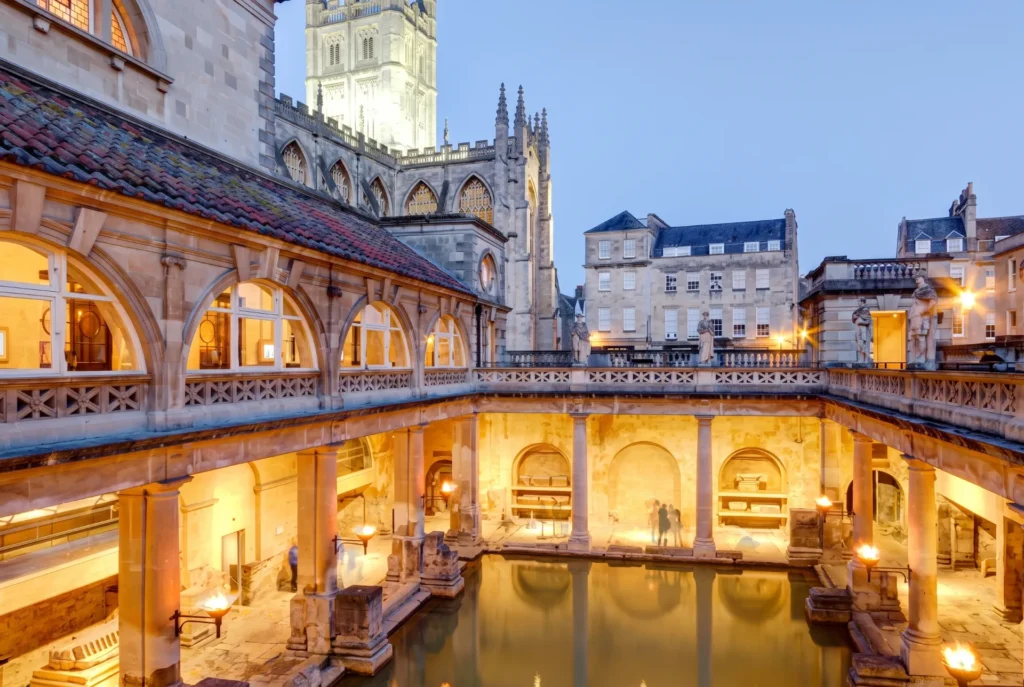
Long before the British Empire, the Romans discovered Britain’s only natural hot springs bubbling up from the ground here. They built an elaborate bathing complex they called Aquae Sulis ( Fun fact, it’s where the city gets its name).
Today, the Roman Baths museum remains one of the finest historic sites in Northern Europe. While you can’t swim in the original Roman waters today, you can still visit those very same Roman Baths, walk on 2,000-year-old pavements, and gaze at the steaming Great Bath
It’s atmospheric, slightly surreal, and genuinely one of the most memorable historical experiences you can have in the UK.
1. A UNESCO World Heritage Site (Twice Over!)
Bath is a double-inscribed UNESCO World Heritage Site — first as the City of Bath in 1987, and then again in 2021 as part of the Great Spa Towns of Europe
It’s the only entire city in the UK to hold this designation. The UNESCO inscription covers everything — the Roman archaeology, the Georgian architecture, and the way the city beautifully integrates with its natural green surroundings.
2. Magnificent Georgian Architecture
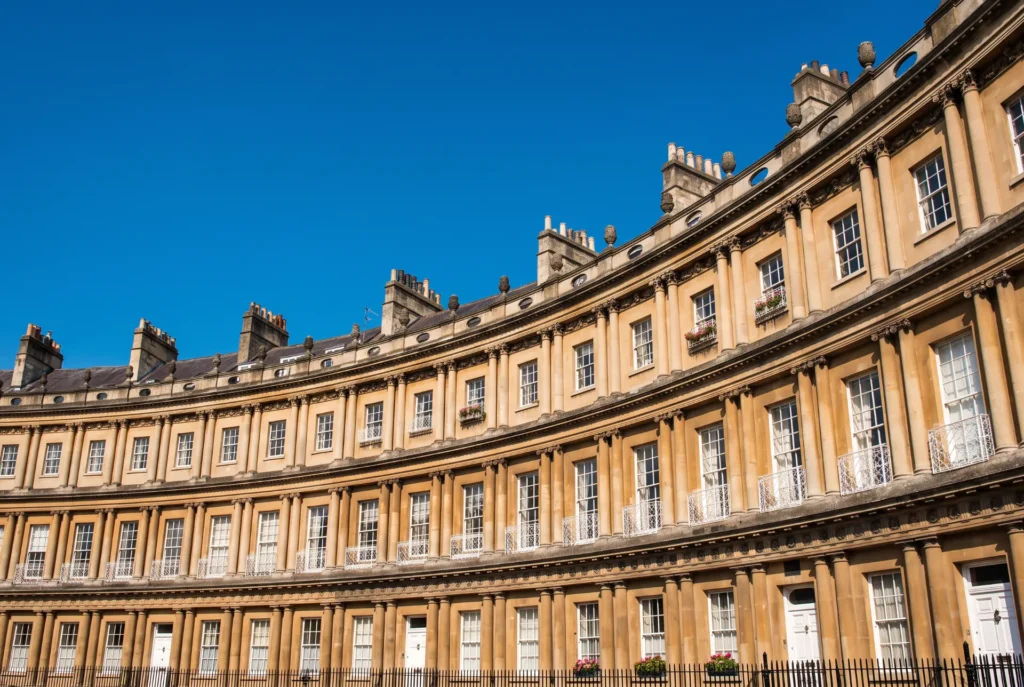
Most of the buildings you’ll see in Bath today date from the 18th century. It is a triumphant showcase of Neoclassical style from the Georgian era, all built from that dreamy, honey-coloured local limestone.
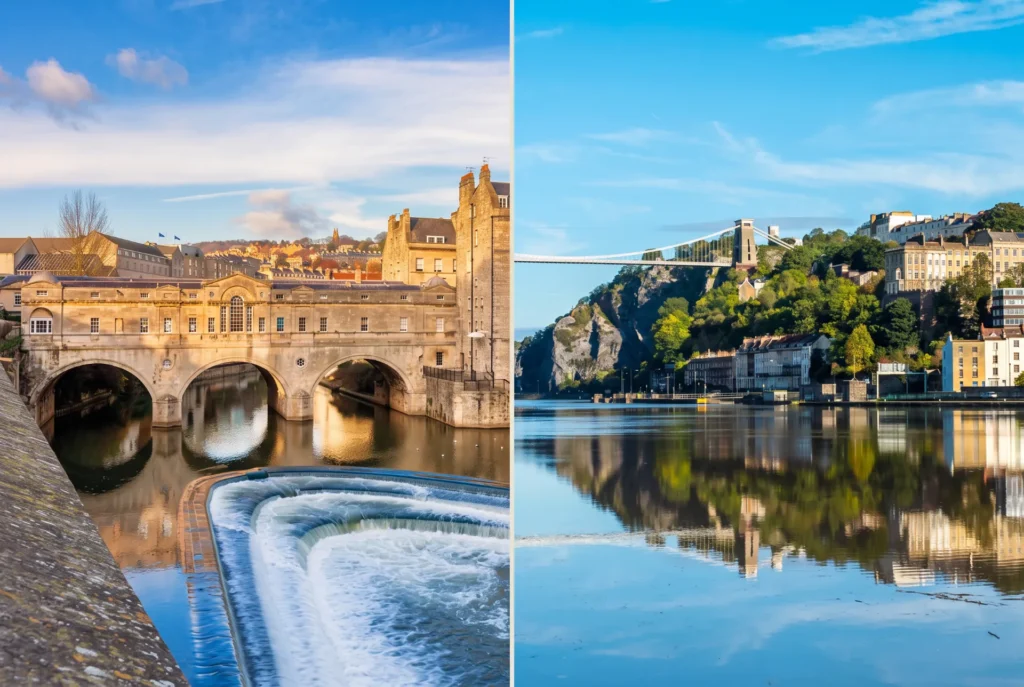
Iconic landmarks include the sweep of The Royal Crescent, the majestic Circus, and the romantic Pulteney Bridge, which is one of only four bridges in the world lined with shops on both sides.
3. Deep Literary Connections (Hello, Jane Austen!)
Bath served as the home and creative backdrop for author Jane Austen in the early 1800s.
It features prominently in her novels Persuasion and Northanger Abbey.
Fans of Bridgerton will also recognize Bath immediately. Many of the show’s most famous Regency-era street scenes were filmed along these very walkways.
Is Bath Classed as Cotswolds?
Technically, no—Bath is an independent city, but it sits right at the southern edge of the Cotswolds Area of Outstanding Natural Beauty (AONB).
While Bath is a urban city and the Cotswolds is a rural region made up of rolling hills and small villages, they are intimately tied together:
- The Stone: Both Bath and the Cotswolds are constructed using the same golden-yellow Jurassic limestone quarried across the region.
- The Cotswold Way: Bath Abbey officially marks the southern terminus of the Cotswold Way, a famous 102-mile long-distance walking trail that stretches all the way north to Chipping Campden.
Because of this shared geology and geography, Bath is widely considered the official “southern gateway” to the Cotswolds.
How Far Away Is Bath From the Cotswolds?
Because Bath sits right on the southern border, you can step into the countryside almost immediately.
| Travel Mode | Distance / Time to Southern Cotswolds | Destination Example |
| By Car | 20–30 minutes (13 miles) | Castle Combe |
| By Train | 13 minutes | Bradford-on-Avon |
| On Foot | 0 minutes | Steps directly onto the Cotswold Way |
If you are using Bath as your base, accessing the countryside couldn’t be simpler:
- Driving: A quick 20-to-30-minute drive north along the scenic A46 or A420 routes puts you right in the heart of classic Cotswold country roads.
- Public Transit: Trains from Bath Spa station will carry you into neighboring Wiltshire and Gloucestershire towns in under 15 minutes.
- Guided Day Tours: Dozens of daily minibus tours depart directly from central Bath, taking you through hidden valleys and quiet villages without the hassle of driving on narrow country lanes.
Is Bath or the Cotswolds Better? (My Honest Take)
Choosing between staying in Bath or staying in a Cotswolds village comes down to what style of holiday you are craving. Neither is “better”—they simply serve two totally different travel vibes.
Bath: Culture, History & Urban Elegance
Bath is a city — a compact, walkable, utterly charming city, but a city nonetheless. It’s packed with Roman history, Georgian elegance, literary connections, and a buzzing food and bar scene.
You can spend your morning exploring ancient baths, your afternoon admiring world-class architecture, and your evening enjoying a Michelin-starred meal.
It’s urban, sophisticated, and culturally dense. Condé Nast Traveller readers actually named Bath the ‘Best UK City’ in 2025 with an impressive score of 97.78. It’s small enough to explore on foot, which makes it perfect for a city break.
The Cotswolds: Countryside, Villages & Peaceful Escape
The Cotswolds, on the other hand, is all about countryside, nature, and quintessential English villages.
We’re talking rolling hills, babbling brooks, thatched-roof cottages, and pubs that have been serving ale since before your great-grandparents were born.
Popular villages include Bibury (with its famous Arlington Row cottages), Bourton-on-the-Water (nicknamed the “Venice of the Cotswolds”), and Stow-on-the-Wold (home to England’s oldest inn).
It’s quieter, more spread out, and best explored with a car (though train access is possible to certain villages).
Choose Bath if:
- You don’t want to rent a car: Bath is easily reached by a 1-hour-and-20-minute direct train from London Paddington and just an easy 15 minutes train from UK’s most underrated city – Bristol. Cnce you arrive, you can walk everywhere on foot.
- You love nightlife, food, and culture: Bath offers world-class dining, independent coffee shops, cocktail bars, theater, and museums that stay open late.
- You like a lively atmosphere: The city feels historic, yet vibrant and energetic.
Choose the Cotswolds if:
- Photography is a big part of why you’re traveling: you want those postcard ready pictures of thatched-cottages and rolling hills.
- You want quiet, rural tranquility: you’re looking for a peaceful retreat away from the city
- You enjoy driving: You don’t mind navigating narrow country lanes and parking in tiny village lots.
- You prefer slow travel: You want to spend your days exploring historic manors, antique shops, and formal gardens.
But honestly, you don’t have to choose! You can get the best of both world by staying in Bath for 2 or 3 nights to enjoy the city on foot, then take a day tour into the Cotswolds countryside.
What Is the Prettiest Town Near Bath?
Here are the three most charming spots located right on Bath’s doorstep:
1. Castle Combe (13 miles north of Bath)
Often called “the prettiest village in England,” Castle Combe looks like a fairytale come to life. With its 14th-century weaver cottages, stone bridges crossing a slow-moving trout stream, and zero modern overhead streetlights, it is pure magic.
2. Bradford-on-Avon (8 miles east of Bath)
Just a 13-minute train ride from Bath Spa station, Bradford-on-Avon offers all the golden-stone charm of Bath, but with a slower, local feel. Walk along the historic Kennet & Avon Canal, cross the medieval town bridge, and stop for tea at a riverside café.
3. Lacock (14 miles northeast of Bath)
Owned almost entirely by the National Trust, Lacock is a frozen-in-time village featuring half-timbered cottages and Lacock Abbey. It is well known for being the filming location for several Harry Potter films and featured heavily in BBC’s Pride & Prejudice.
Is Bath Expensive for Tourists?
Because Bath is a popular destination in the UK, costs can lean toward the higher side, similar to central London. However, because the city is compact and walkable, you can easily enjoy a fantastic trip on a realistic budget.
Breakdown of Average Costs in Bath
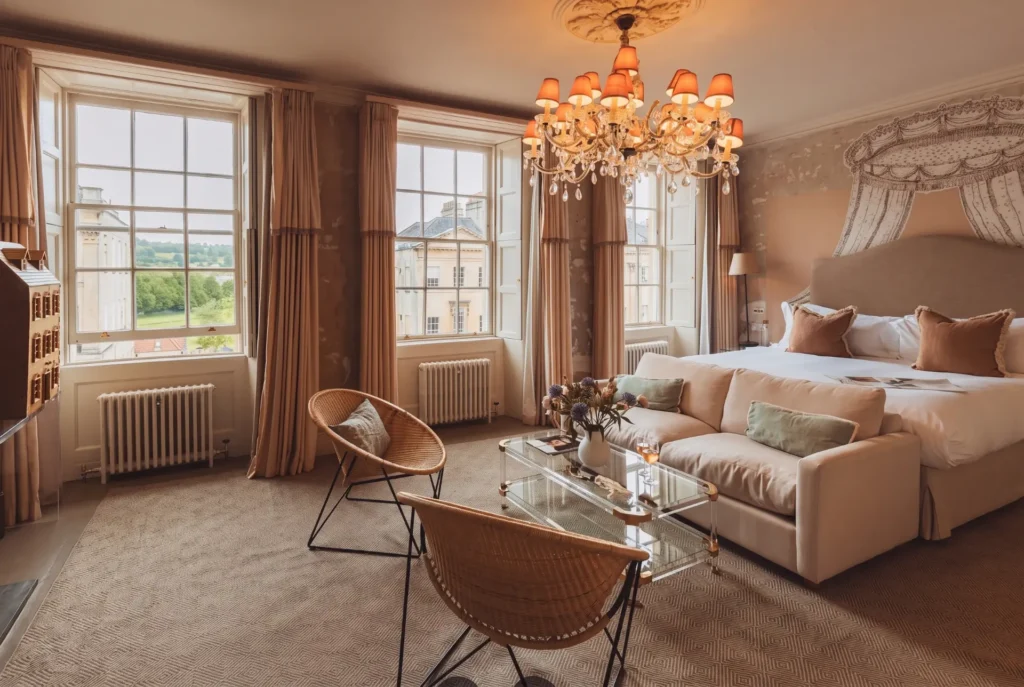
- Accommodation: Mid-range boutique hotels and guesthouses average £120 – £200 per night. Budget hostels run around £30 – £50 per bed, while iconic luxury spots like The Gainsborough Bath Spa or The Royal Crescent Hotel can exceed £350+ per night.
- Food & Drink: A casual pub lunch or sandwich runs about £10 – £15. A nice two-course dinner at an independent bistro costs around £30 – £45 per person (excluding drinks).
- Attractions: Major sites charge standard admission fees. Expect to pay around £20 – £25 for the Roman Baths, and around £40 – £50 for a two-hour soaking session at Thermae Bath Spa.
Budget-Friendly Local Tips for Bath
Eat Off the Main Tourist Drag: Avoid restaurants directly outside the main Abbey square. Walk 5 minutes down independent side streets like Walcot Street or Kingsmead Square for incredible local meals at better prices.
Ditch the Car: Do not drive in central Bath! Parking is scarce and expensive, and the city center has clean-air zone fees. Take the train in and explore entirely on foot to save money on parking and fuel.
Enjoy Free Architecture & Nature: Walking around Bath costs absolutely nothing. You can admire the Royal Crescent, stroll through the Botanical Gardens at Victoria Park, walk across Pulteney Bridge, and hike up to the Prior Park Landscape Garden skyline view for free.
Book Attractions in Advance: Ticket prices for major attractions like the Roman Baths are significantly cheaper when purchased online ahead of time compared to walk-up prices.
Final Thoughts: Should You Put Bath on Your Itinerary?
If you appreciate rich history, stunning architecture, incredible food, and walkable streets, Bath deserves a spot near the top of your UK travel list. It bridges the gap between urban sophistication and rural charm, making it the perfect base to experience both ancient British history and the English countryside.
Grab a comfortable pair of walking shoes, book your train ticket, and get ready to fall in love with one of Britain’s most gorgeous cities!