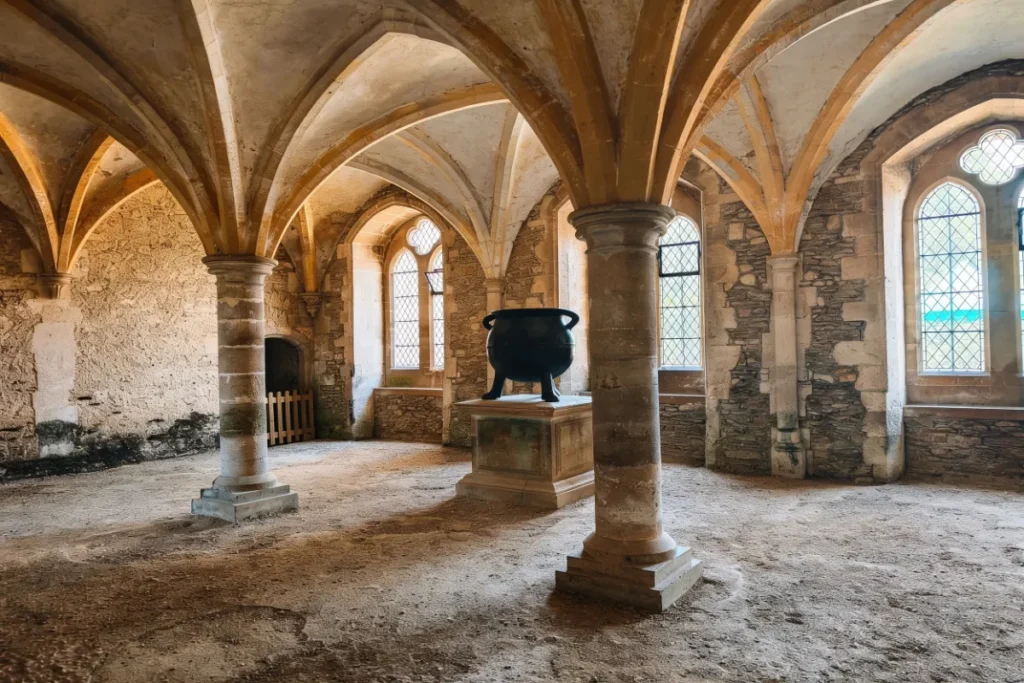
When I was traveling in Morrocco, I started chatting with a guy in my hostel over breakfast. He was from Bristol and couldn’t stop gushing about how much he loves his hometown. It piqued me interest and he strongly recommended me to come check it out for myself.
I’d heard of Bristol before – vaguely, in the way you hear about places that aren’t London or Edinburgh or Manchester. I knew it was somewhere in the southwest, that was about it.
Then I spent a week there, and I haven’t stopped thinking about it since. I found it to be one of the most creative, historic, and unexpectedly beautiful corners of the UK.
Bristol isn’t the kind of place that overwhelms you with famous landmarks around every corner. Its charm comes from wandering colourful neighbourhoods and historict streets without an agenda, finding independent cafés tucked inside converted warehouses, discovering centuries of history hiding between modern street art, and spending afternoons simply walking along the harbour.
It’s got centuries of amazing history with deep spiritual roots, a vibrant music and street art scene that needs no introduction, easy access to some of the most beautiful countryside in England, and a food scene that will quietly ruin you for anywhere less interesting.
And it’s compact enough that you can walk most of it.
Why Bristol Deserves More Attention
Bristol has a personality that’s difficult to compare with anywhere else in England.
It somehow feels both historic and youthful. Medieval churches stand beside colourful murals. Elegant Georgian terraces overlook converted industrial docks filled with independent restaurants. Students, artists, families and entrepreneurs all seem to coexist, giving the city an energy that’s creative without ever feeling pretentious.
Unlike London, you rarely feel rushed. People here seem more relaxed, strangers smile and greet you on the street.
Unlike smaller villages, there’s always something happening.
For visitors staying a while, that balance is exactly what makes Bristol work so well.
You can spend the morning exploring museums, enjoy lunch overlooking the harbour, wander through independent bookshops in the afternoon and finish the day with live music or dinner from almost any cuisine imaginable—all without needing a car.
Bristol – Britain’s Most Creative City
If London is the corporate engine of the UK, Bristol is its artistic soul. It’s fiercely independent, unapologetically eccentric, and deeply committed to community spaces.
The city pulses with music, festivals, and indie vibes. If you stay a while at Bristol, your calendar will be perpetually full of art launches, indie markets, and cultural festivals.
Hometown of Banksy
Bristol is Banksy’s hometown, and unlike almost anywhere else in the world, you can still find his actual work in the actual locations it was painted, out in the open, for free.
Keep an eye out around the Stokes Croft and Park Street areas in particular, where several of his most famous pieces still live on walls where he painted themprotected behind perspex but otherwise exactly as they were left. It’s a genuinely different feeling to see street art in its original context rather than in a gallery, and it turns the city into fun urban treasure hunt where you don’t know what you’ll find on the next corner.
Keep an eye out for The Well Hung Lover on Park Street, The Girl with the Pierced Eardrum down near the Hanover Quay, or Mild Mild West in Stokes Croft—the city’s bohemian capital. The wider street art scene in Stokes Croft is worth a wander even beyond the Banksys; this is a neighbourhood that treats its walls as a living gallery
M Shed: Bristol’s Story (and Free to visit)
A must-visit is the M Shed on the harbourside. Housed in a historic 1950s transit shed harbourside, it tells Bristol’s story through objects, personal tales, photos, and interactive bits.
You’ll find Banksy pieces here too, like the Grim Reaper that used to be on a boat in the harbour. It’s not just a museum; it feels like a community space where locals and visitors mix.
Bristol Is the Perfect Base for Exploring Southwest England
This is where Bristol really shines.
You could happily spend several days exploring the city itself, but you can reach some of the most beautiful places in Southwest England from here.
it’s also incredibly well connected by train and bus, making it one of the best bases for slow travel in Southest England.
The Timeless Romance of Bath
Just a quick 10-15 minute by train from Bristol Temple Meads, Bath feels completely different from Bristol.
Bath is the only UK city designated a UNESCO World Heritage Site. It is well known for its spectacular Roman Baths and beautifully preserved Gorgian architecture. It is the only hot string in Britain and you can bathe in naturally heated, mineral-rich waters at the Thermae Bath Spa.
Spend a day soaking in the views of the Pulteney Bridge, exploring the stunning Bath Abbey, or wandering the iconic Royal Crescent. It’s the perfect place to get your Jane Austen fix before returning home to Bristol’s laid-back pubs.
Castle Combe and the Fairy-Tale Cotswold Villages
If you’ve ever dreamed of thatched-roof stone cottages, ivy-draped bridges, and babbling brooks, the Cotswolds are your answer. By taking a quick train to Chippenham and a short local bus ride, you can find yourself in Castle Combe, frequently named the prettiest village in England.
You will find honey-coloured stone cottages, a 15th-century market cross, and a little packhorse bridge over the By Brook that’s been photographed more times than most people can count. It’s also been a filming location for movies and shows like War Horse , Stardust and Downtown Abbey.
If you are seeking more Cotswold charm, the villages of Lacock (National Trust-owned, with an abbey that doubled as Hogwarts in the Harry Potter films) and Bradford-on-Avon are similarly reachable by train and bus.
Tip: Planning a trip to Lacock? Read my Harry Potter Filming Locations in Lacock Guide for details on all the scenes filmed there and other tips.
The Spiritual Magic of Glastonbury Tor
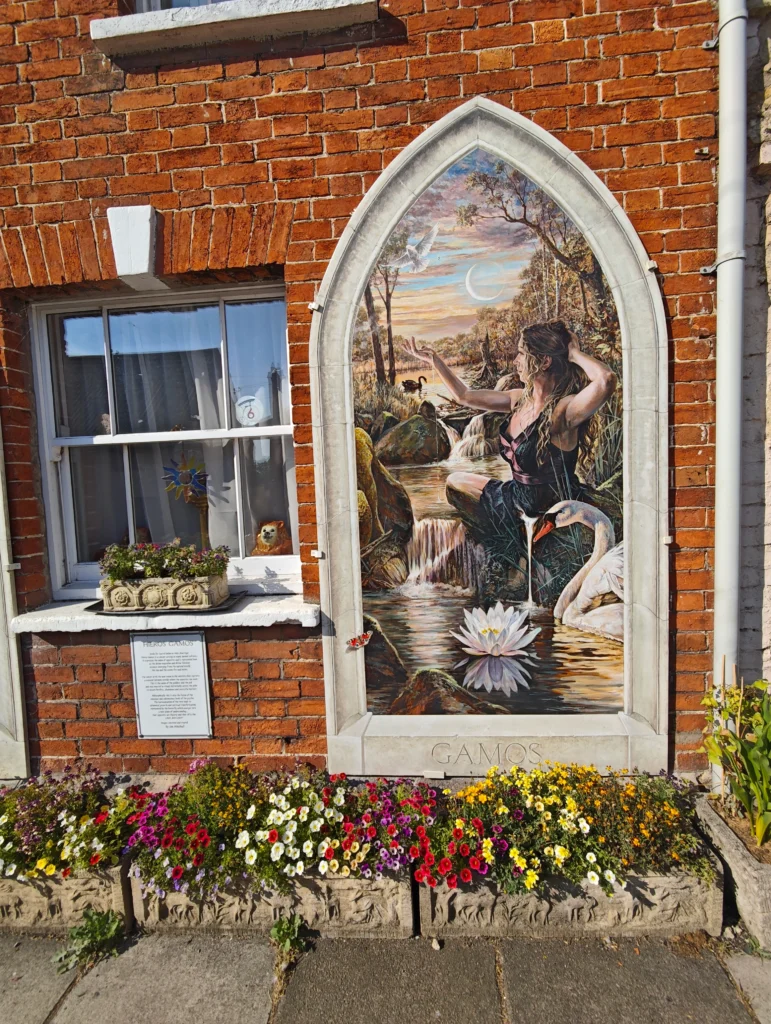
Beyond the famous music festival it’s known for, Glastonbury is steeped in Arthurian legend and pagan history. Its ancient spring water and the hike up to Glastonbury Tor—a dramatic hill topped by the roofless St. Michael’s Tower— offers breathtaking, sweeping 360-degree views over the Somerset Levels.
Known as the spiritual heart of England, Glastonbury is a place of deep spirituality, myth, and incredible energy that draw in pilgrims all over the world.
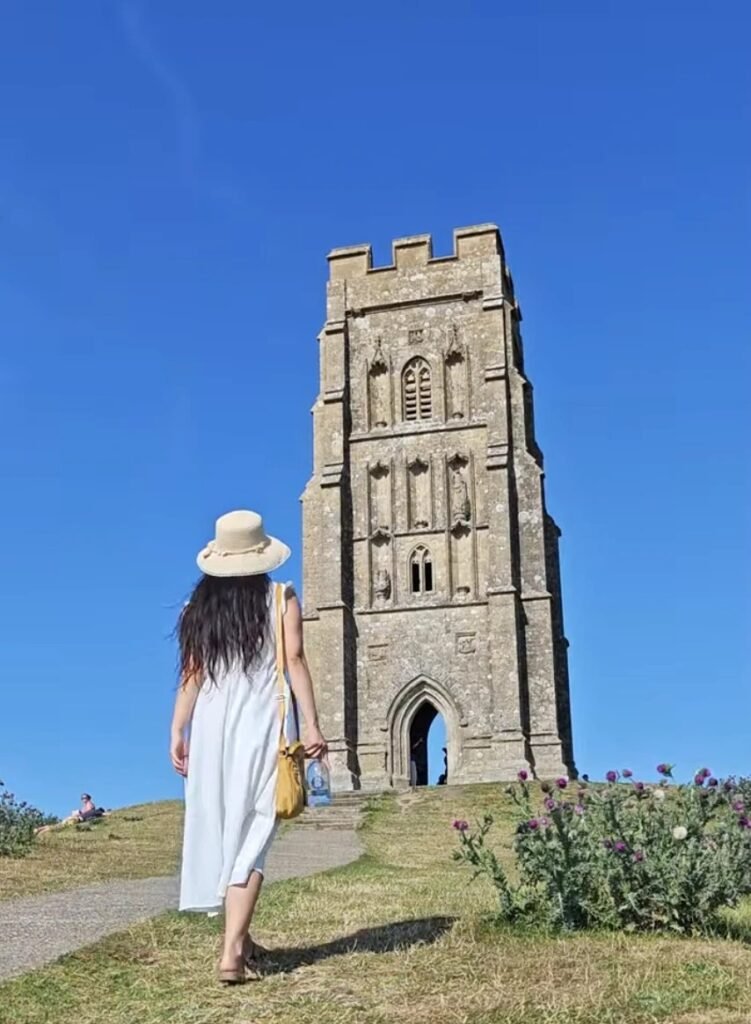
The 376 bus runs from Bristol to Glastonbury fairly regularly throughout the day (journey time is around an hour and half), so it’s an easy, car-free day out.
A City Where History Still Feels Alive
Bristol has been an important city for nearly a thousand years, and its history stretches far beyond what many visitors realise.
Long before colourful street art appeared on brick walls, Bristol was one of England’s busiest medieval ports. Merchants traded with Ireland, Spain and Portugal, ships crossed the Atlantic, and fortunes were built along its waterfront.
As you wander through the Old City today, remnants of that past appear almost everywhere. Narrow cobbled streets, medieval churches and centuries-old buildings sit comfortably beside independent cafés and modern shops.
One of my favourite things about Bristol is that history isn’t locked away inside museums. It’s woven into the streets you walk every day.
The Knights Templar and Bristol’s Forgotten Medieval Past
One of Bristol’s most fascinating historical sites is the ruined Temple Church.
Built during the 12th century by the Knights Templar, the church was part of a larger religious complex established by one of Europe’s most famous medieval military orders. Although much of the original complex has disappeared, the church remains as a haunting reminder of Bristol’s medieval importance.
The most striking feature is its leaning tower.
Damaged over centuries and later heavily bombed during the Second World War, the tower now tilts noticeably to one side, giving it an appearance unlike almost any church in England. Rather than rebuilding it completely, the ruins have been preserved as a peaceful public garden where visitors can quietly reflect on the city’s layered history.
A Maritime City That Changed Britain
Bristol’s floating harbour tells another chapter of the city’s story.
For centuries, ships from across Europe and later the wider world arrived here carrying goods that helped transform Britain into a global trading nation. The harbour also reflects more difficult parts of history, including Bristol’s role in the transatlantic slave trade—something the city has increasingly acknowledged through museums, exhibitions and public discussions.
Today, those same docks have been reinvented.
Warehouses have become galleries, cafés, apartments and cultural spaces, making the harbour one of my favourite places to simply wander without any particular destination.
Majestic Green Spaces and Clifftop Hikes
Despite being a vibrant city, Bristol never feels disconnected from nature.
It seamlessly blends its urban density with some of the most dramatic green landscapes in the country. There are plenty of hiking trails within an easy reach from the city.
The Suspension Bridge and Beyond
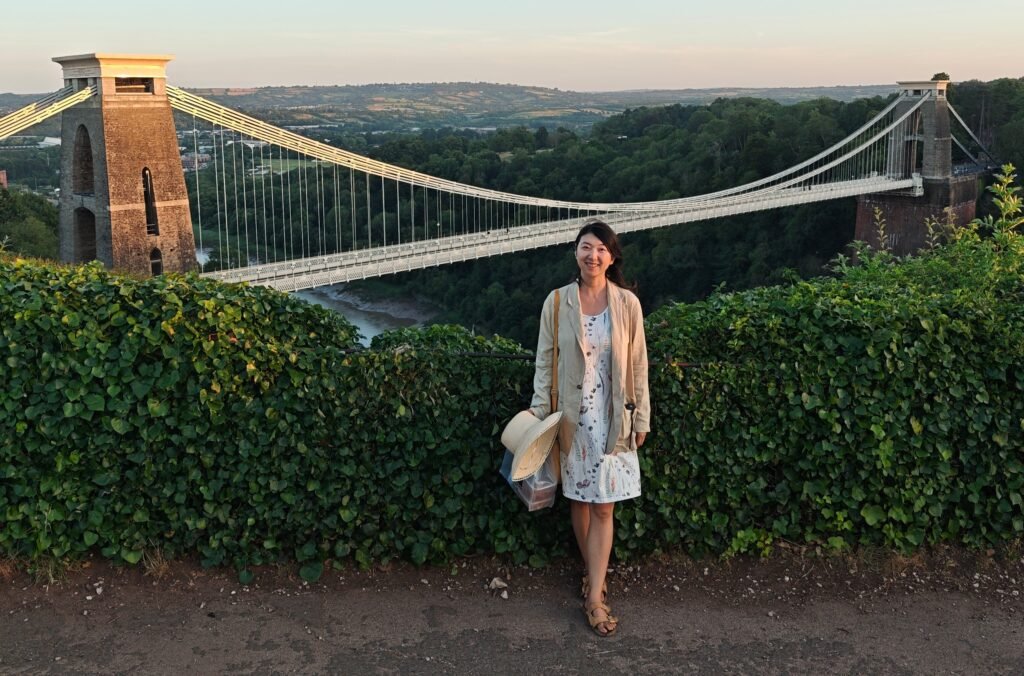
The Clifton Suspension Bridge is Bristol’s most iconic landmark spans the dramatic Avon Gorge and connects the well-heeled Clifton neighbourhood with Leigh Woods on the other side.
The views over the gorge and out toward the Severn are breathtaking and some of the best you’ll get without leaving the city limits. Seeing the golden glow over the gorge during sunset is one to cherish.
Cross the bridge (it’s free for pedestrians, by the way) and you’re straight into Leigh Woods, an 850-acre expanse of ancient woodland managed by the National Trust, with hiking paths through beech and oak
Brandon Hill – A Green Crown in the City Centre
If you don’t have time for a full hike, Brandon Hill is Bristol’s oldest public park – a peaceful green rise just a short walk from Park Street and the Harbourside.
It’s perfect for picnics, slow strolls, or just escaping the city buzz just a short distance from the centre. At the top stands Cabot Tower, built in 1897 to honour explorer John Cabot’s voyage to North America.
A Genuine Culinary Capital
This might be my favourite thing to talk about, honestly. Bristol’s food scene doesn’t get nearly the credit it deserves, and it’s shaped by the same diversity and independent spirit that runs through the rest of the city.
You’ll find proper groceries and restaurants representing food cultures from every corner of the world, often run by people who’ve been perfecting these dishes for generations.
From Kopitiam to High-End Thai
Bristol’s diverse population has cultivated a radically inclusive food scene. Whether you are craving authentic Malaysian comfort food at a local kopitiam, authentic Japanese ramen houses, fiery street-style Thai curry, or fragrant pan-Asian small plates, Bristol’s independent restaurants deliver world-class execution without the London price tags.
St Nicholas Market – A World of Flavour
At the heart of it all is St Nicholas Market – known locally as St Nicks. The food court here is legendary. You can eat your way around the world without leaving the building: Spanish tapas from La Lola, Caribbean jerk, Thai curries, Moroccan falafel, Malaysian street food, Sri Lankan delights.
It’s open Monday to Saturday from 9.30am to 5pm, and it also hosts the Bristol Farmers’ and Producers’ Market, Street Food Market, and Bristol Indies’ Market.
The Vegan and Vegetarian Capital of the World
Here is a fun piece of trivia for you: Bristol has consistently been ranked as the number one city in the world for veganism according to global search data. Almost every menu in town will have a vegetarian friendly dish or two.
It isn’t just accommodating to vegans and vegetarians. It genuinely celebrates them.
If you want an upscale night out, head down to the shipping containers of Wapping Wharf and grab a seat at Root, a brilliant restaurant where vegetables are given star billing, flipping the traditional menu on its head by making meat the side dish.
For the ultimate plant-based comfort food, you can’t miss the legendary Oowee Vegan on Baldwin Street for mind-blowing “dirty” burgers and loaded waffle fries that will satisfy even the most committed meat-eaters.
Or, if you’re exploring the bohemian streets of Stokes Croft, pop into Koocha Mezze Bar for vibrant, colorful Persian-inspired plant-based small plates, or the community-run Café Kino for local organic ciders and hearty vegan brunches.
Bristal Comes Alive After Dark
Bristol has long been known for its nightlife, and it’s easy to see why. The city has a thriving music scene, countless independent pubs, craft breweries, cocktail bars and late-night venues that attract everyone from university students to young professionals and lifelong locals.
Whether you’re into jazz, electronic music, indie bands or intimate acoustic performances, there’s usually something happening somewhere.
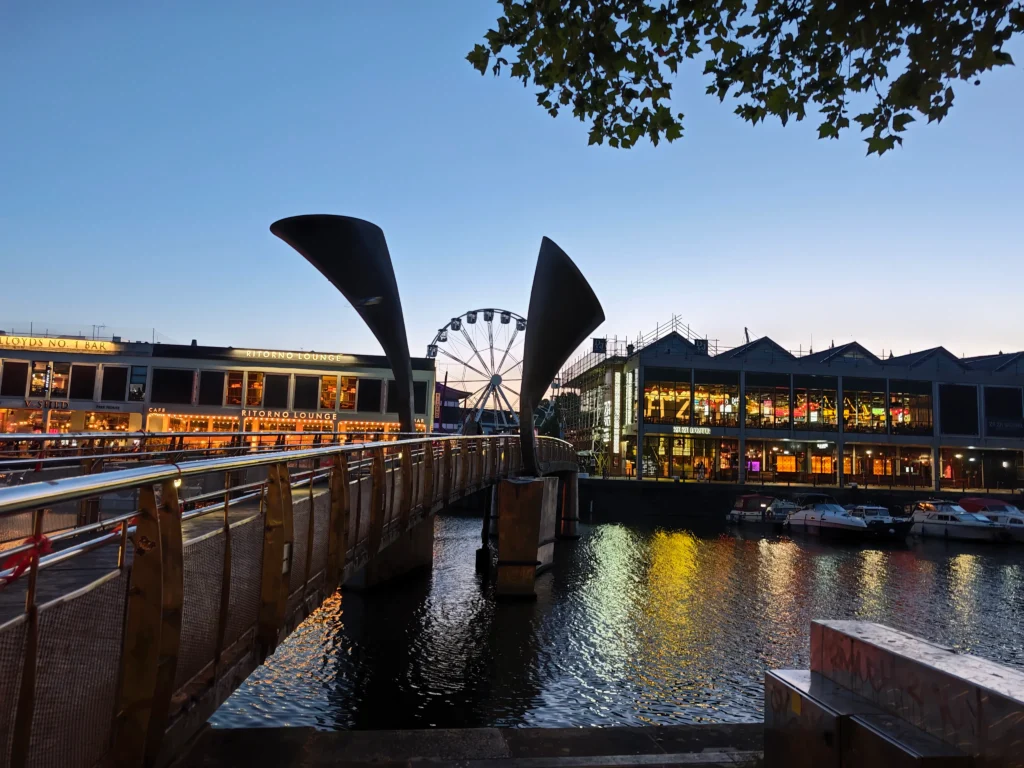
Historic Pubs and Speakeasies
For a classic evening, you can wander down the cobblestones of historic King Street. It is a spectacular outdoor social hub where locals gather outside centuries-old watering holes. You can grab a traditional West Country cider at The Coronation Tap in Clifton, or hunt for hidden, unmarked doorways in the city center like The Milk Thistle—a sprawling, four-story speakeasy serving some of the finest artisan cocktails in the country inside a stunning, moody Victorian building.
The Cozy, Independent Arts Hubs
Step into places like Strange Brew or The Love Inn on a weekday evening, and you’ll find spaces that seamlessly morph from daytime art galleries and relaxed cafes into intimate, inclusive nighttime hangouts. You can sit with a local craft beer, listen to an experimental live jazz quintet, or catch an intimate vinyl-only DJ set while having an actual conversation with the person next to you.
Culture After Dark – Theatre and Comedy
For an evening that doesn’t revolve around a drink, there’s also comedy (The Gaffe Comedy Club brings in genuinely well-known stand-up acts), theatre at the Bristol Old Vic and Bristol Hippodrome, and a thriving LGBTQ+ scene concentrated around the city centre.
I think that’s what makes Bristol’s nightlife feel different from many other cities. It’s energetic without being overwhelming. There are certainly places where you can dance until the early hours if that’s your thing, but there’s also a slower, more relaxed side that fits perfectly with the rhythm of the city.
An unforgetable night out can just as easily mean a jazz pub, a hidden cocktail bar, or a pint on a converted barge as the sun goes down over the harbour.
Conclusion: Why Bristol Should Be Your Next Slow Travel Base
When you travel slower, you stop looking for cities that merely gives you a list of checkbox attractions to entertain you for forty-eight hours and start looking for cities that is actually livable and embraces your presence.
Bristol is a city that you can easily stay for a month, even more. It offers centuries of history, it’s creative without trying too hard. The food scene rivals much larger cities, green spaces are always close by, and some of England’s best day trips are right on your doorstep.
It’s a city where you can spend your morning discovering a centuries-old medieval ruin, your afternoon hunting for fresh street art, and your evening sitting by the water, listening to live jazz while eating some of the best plant-based food in the world. It gives you the infrastructure and connections of a major European hub, but keeps the warm, fiercely independent, and creative soul of a tight-knit neighborhood.
If you’re planning a slower journey through England, don’t just use Bristol as a transport hub.
Stay awhile.
Explore its neighbourhoods. Shop at the markets. Walk across Clifton Suspension Bridge at sunset. Take a train to Bath one day and hike Glastonbury Tor the next.
Then come back to Bristol in the evening, find another independent restaurant you’ve never tried before, and let the city continue surprising you.
Sometimes the places we remember most aren’t the ones with the biggest attractions.
They’re the ones that quietly feel like home.
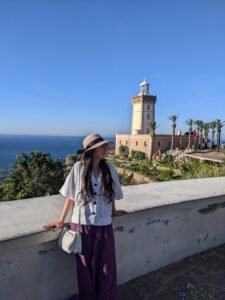
Sophie is a Singaporean traveler and travel writer who has spent the past decade living across continents. Her previous career in tech took her from Sydney and San Francisco to Europe, where she spent the last five years living in Paris and the Netherlands.
Today, she writes about the art of slowing down. Sophie believes the best way to understand a destination is to stay a little longer, wander without a map, and let the authentic character of the place unveil itself naturally.