
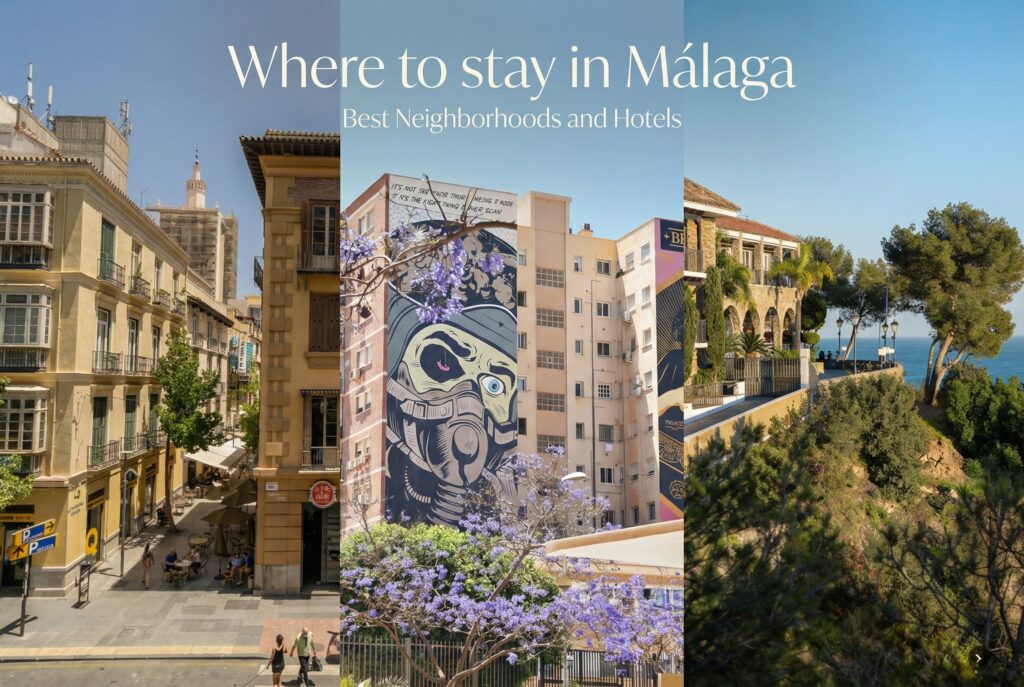
Where to Stay in Malaga: A Local’s Neighborhood Guide (2026)
If you’re wondering where to stay in Malaga, you have come to the perfect place. Málaga is one of those cities that somehow manages to be both effortlessly laid-back and quietly electric at the same time, a sun-drenched Andalusian port town that has over the last decade, grown into one of southern Europe’s most compelling urban destinations. And like any city worth visiting, knowing where to base yourself makes all the difference between a good trip and an unforgettable one.
The good news? Málaga punches well above its weight when it comes to accommodation, offering a range that stretches from grand seafront palaces dripping in Belle Époque glamour to intimate boutique hotels hidden inside centuries-old buildings, where Roman ruins sit quietly beneath glass floors. Before you start looking at specific hotels or vacation rentals, it helps to think about how you want to spend your days. Do you see yourself spending hours wandering through historic, narrow cobblestone streets, or are you craving a more laid-back retreat where the beach is just a stone’s throw away?
A Quick Note Before You Book
Malaga in 2026 is at an interesting crossroads. Tourism has grown significantly over the past few years, which means there are more great places to stay than ever — but also more noise, more short-term rentals crowding out local life, and a few neighborhoods that can feel overwhelming in peak season (July and August, especially).
My honest advice? Book early if you’re visiting between June and September, and don’t be afraid to look slightly beyond the obvious tourist corridor. Some of the best stays in this city are just a ten-minute walk from the cathedral.
Practical Tips for Booking Your Stay in Malaga
On timing: The best time to visit Malaga for comfortable weather without peak crowds is late September through early November, or late March through May. Accommodation prices drop significantly outside of July and August.
On transport: Malaga is walkable in a way that many Spanish cities aren’t. Most neighborhoods I’ve described above are reachable on foot from each other — the city’s compact layout is genuinely one of its greatest assets.
On noise: Malaga is a lively city and Andalusians keep late hours. If you’re sensitive to noise, always check hotel reviews specifically for sound insulation, and consider staying on upper floors or on streets that don’t host bars.
On apartment vs. hotel: For stays of fewer than four nights, a hotel usually offers better value and more flexibility. For longer stays, a well-chosen apartment allows you to shop at the market, cook occasionally, and settle into a rhythm that turns a holiday into something closer to real life here.
If this is your first time here, make sure you check out my posts on What to Do and Eat in Malaga, Perfect 3 Days Itinerary in Malaga and Best Day Trips from Malaga for ideas on what to do, see and eat in Malaga.
Quick Overview: Best Areas to Stay in Malaga
- Historic Centre – Best for first-time visitors and short stays
- La Merced – Lively, central, and social, with a local feel
- Soho – Creative, quieter, and stylish
- El Perchel / Guadalmedina — for slow travelers who want to live like a local on a real budget
- La Malagueta – Beachfront living with city access
- El Palo & Pedregalejo – Local, relaxed, and perfect for slow travel
- Limonar & El Limonar Alto — for a quieter, more elegant stay away from tourist crowds
- Teatinos – Residential, modern, and budget-friendly
Centro Histórico: For First-Timers Who Love the Hum of City Life
Best for: First-time visitors, culture lovers, short stays
Vibe: Walkable, lively, historic
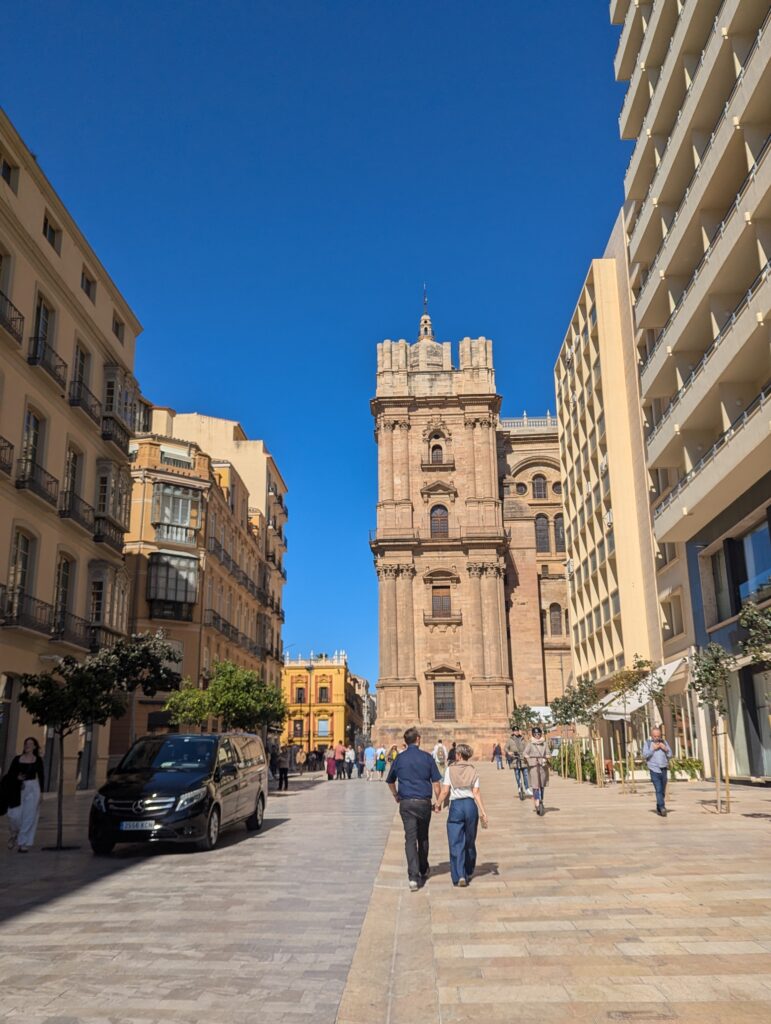
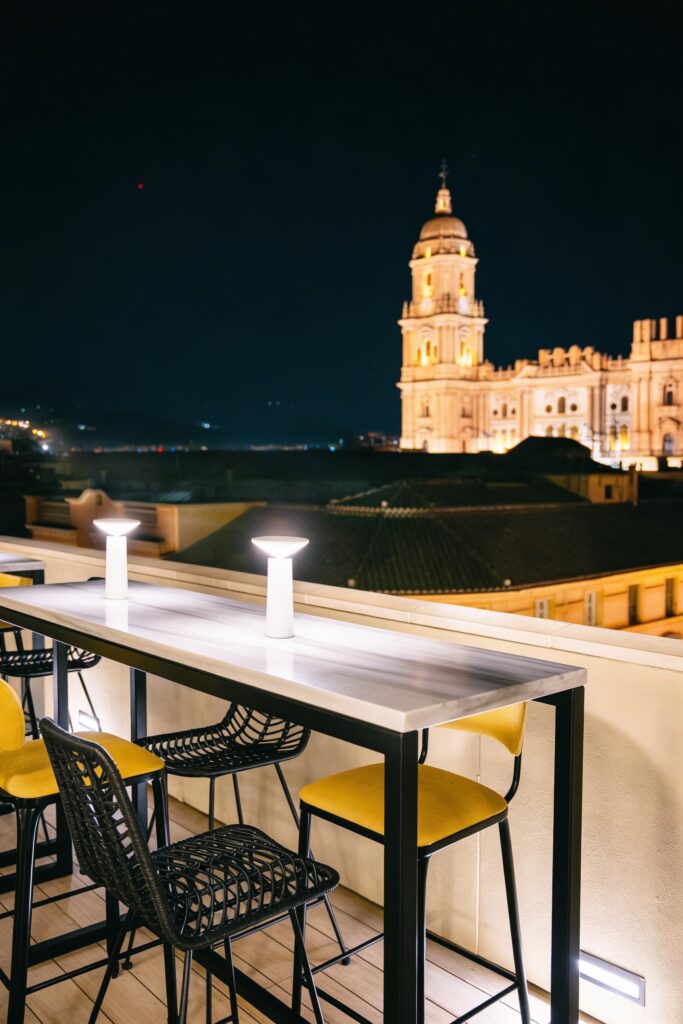
If this is your first visit, your heart is probably set on the historic center and it’s a wonderful choice. Staying here means you’re steps from the cathedral, the Picasso Museum, and the bustling Calle Larios. You’ll fall asleep to the distant murmur of conversation from a plaza, and wake up to the smell of fresh coffee from the cafe downstairs.
What I love about the center is how walkable it is. Everything is at your fingertips. But it’s also the busiest part of town, especially during the high season. If you’re someone who finds joy in energy and convenience, this is your spot. Just know that the charming alleys can get crowded, and true quiet is a rare gem here.
My advice for a slower stay in the center: Look for accommodations on the smaller side streets off the main thoroughfares, like those near the Plaza de la Merced or around the Roman Theatre. These pockets retain the old soul of the city while buffering some of the noise.
Why stay here
- Walk everywhere
- Beautiful architecture and atmosphere
- Ideal for 2–4 night stays
Things to consider
- Noise can be an issue
- Less “local life” feeling
- Apartments are often small
Recommended stays
- Vincci Selección Posada del Patio — One of the most architecturally stunning hotels in the city, incorporating a genuine Roman archaeological site into its design. Worth a look even if you don’t stay.
- Room Mate Valeria — Modern design, great central positioning, and a rooftop pool that you’ll appreciate more than you expect.
- Small guesthouses near Plaza de la Merced — Charm without the tourist-hotel price tag; several options on quieter lanes offer real character.
La Merced: For the Soulful, Laid-Back Explorer
Best for: Solo travelers, culture lovers, short-to-medium stays
Vibe: Lively, youthful, local-meets-international
Just a few blocks from the cathedral, the Plaza de la Merced is the true heart of bohemian Malaga. This is where Picasso was born, and where the city’s creative spirit still feels most alive. The plaza itself is wide and tree-lined, filled with terraces where people read, chat, and watch the world go by for hours.
The streets radiating out from La Merced are some of my favorite in the city. Lagunillas, near La Merced, is an up-and-coming spot with street art and community spirit. It’s where locals live, away from tourist crowds. They’re lined with vintage shops, old-school bodegas, and tiny tapas bars that have been serving the same recipes for generations. It’s a neighborhood that feels lived-in, authentic, and wonderfully unhurried.
Staying near La Merced means you’re perfectly positioned to explore both the center and the eastern parts of the city. It is an ideal neighborhood to stay if you want to feel part of Málaga’s daily rhythm On a Sunday morning, you’ll see families buying bread, kids chasing pigeons, and neighbors stopping to chat. It’s a beautiful place to slow down.
Things to consider
- Lively evenings around the plaza (light sleepers should choose carefully)
- Limited parking
- Best for travelers comfortable with a bit of city noise
Recommended stays
- The Atarazanas Malaga Boutique Hotel nearby offers stylish rooms at reasonable rates.
- There are many hostels and guesthouses available here for travelers seeking a more budget conscious option and connections with fellow travelers.
Accommodation tips
Look for apartments or boutique hotels on side streets just off the plaza rather than directly facing it. You’ll still feel the energy of the neighborhood, but with much quieter nights.
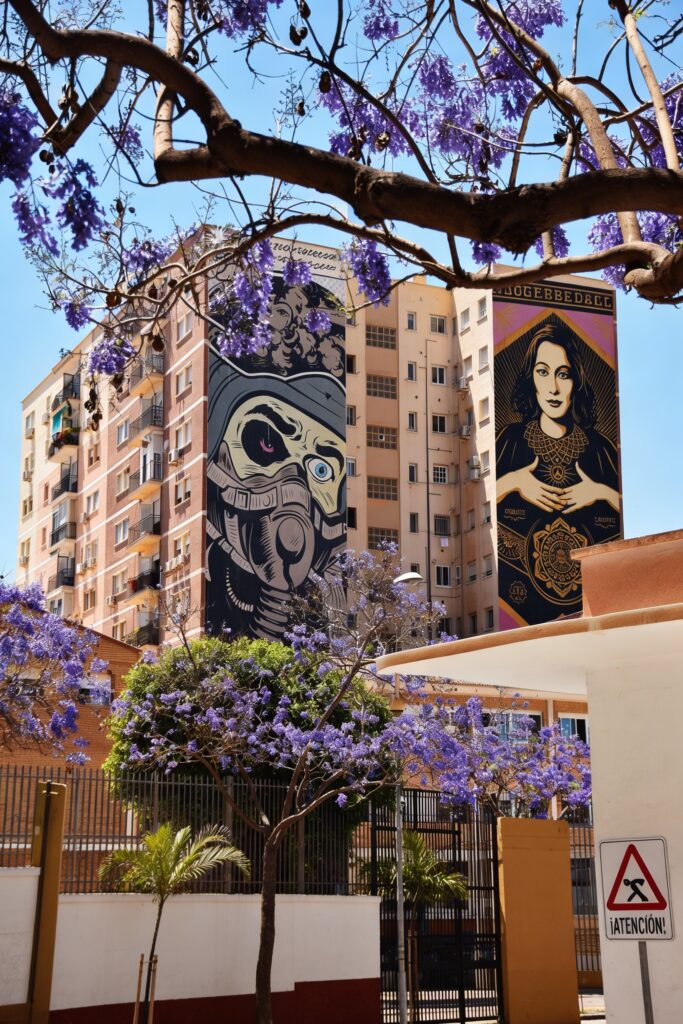
Soho: For the Art-Inclined and the Curious
Best for: Design lovers, couples, repeat visitors
Vibe: Creative, calm, understated
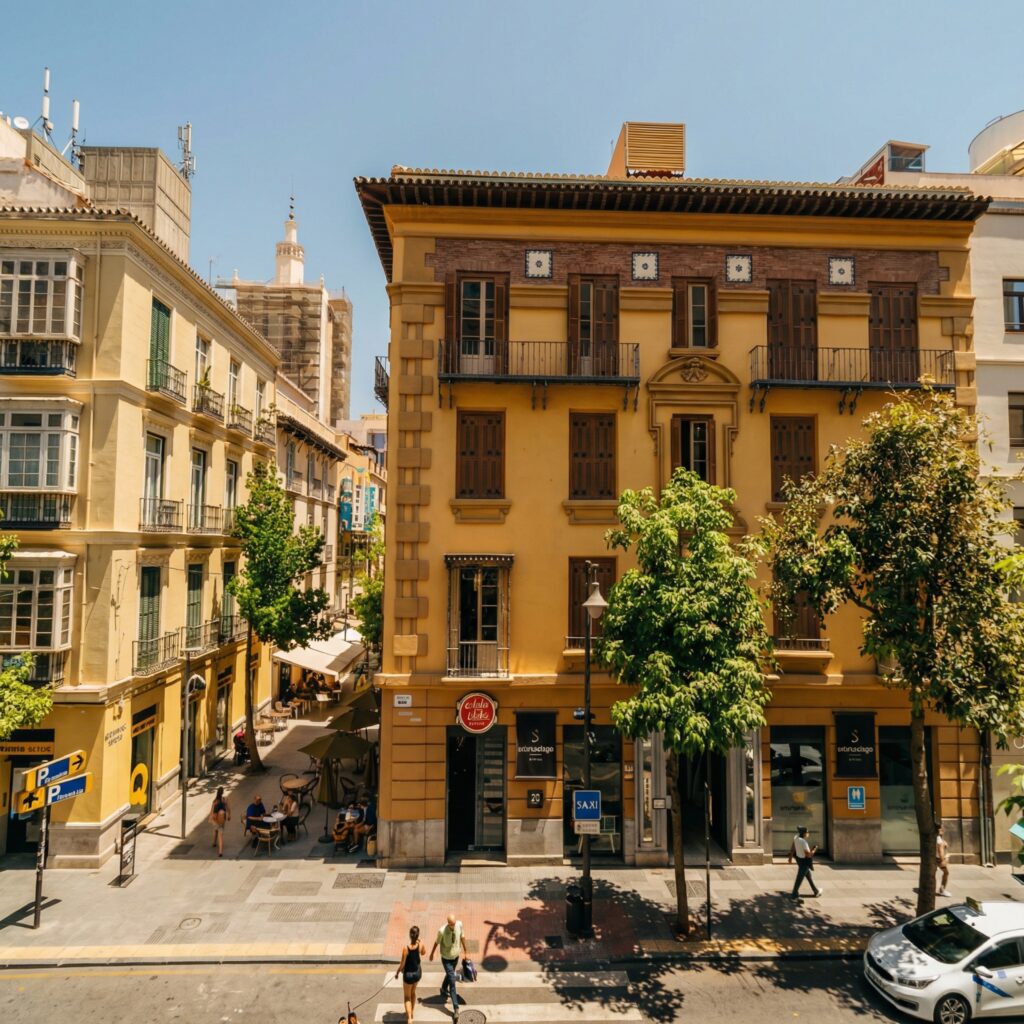
Across the riverbed (el cauce) from the historic center is Soho, Malaga’s former industrial quarter turned contemporary art hub. This is where the city gets a little edgier, a little more experimental. The streets are wide, the buildings are painted with massive murals, and the vibe is unapologetically cool.
Soho is where I often suggest staying if you want to be central but not surrounded by crowds. It’s close to the centre, the port, and the train station, yet it feels more grounded. You’ll find cutting-edge galleries like the CAC (Centro de Arte Contemporáneo), independent boutiques, and some of the city’s most innovative dining. It’s quieter at night than the historic core, yet it has a creative pulse that’s hard to find elsewhere.
The food scene here feels less traditional and more global. If you like natural wine bars, fusion tapas, and roasteries that take their coffee very seriously, this is the neighbourhood for you.
Recommended stays
- Hotel Soho Boutique Málaga — The neighbourhood’s anchor accommodation. Well-designed, reasonably priced, and genuinely embedded in the local character of the area.
- For something more intimate, try the Room Mate Valeria where they have rooftop yoga sessions
- For budget travelers, I recommend Literal Hostel, a hotel with very cozy pods.
Why stay here
- Central without being hectic
- Stylish hotels and apartments
- Easy access to transport
Things to consider
- Fewer traditional attractions
- Quieter nightlife
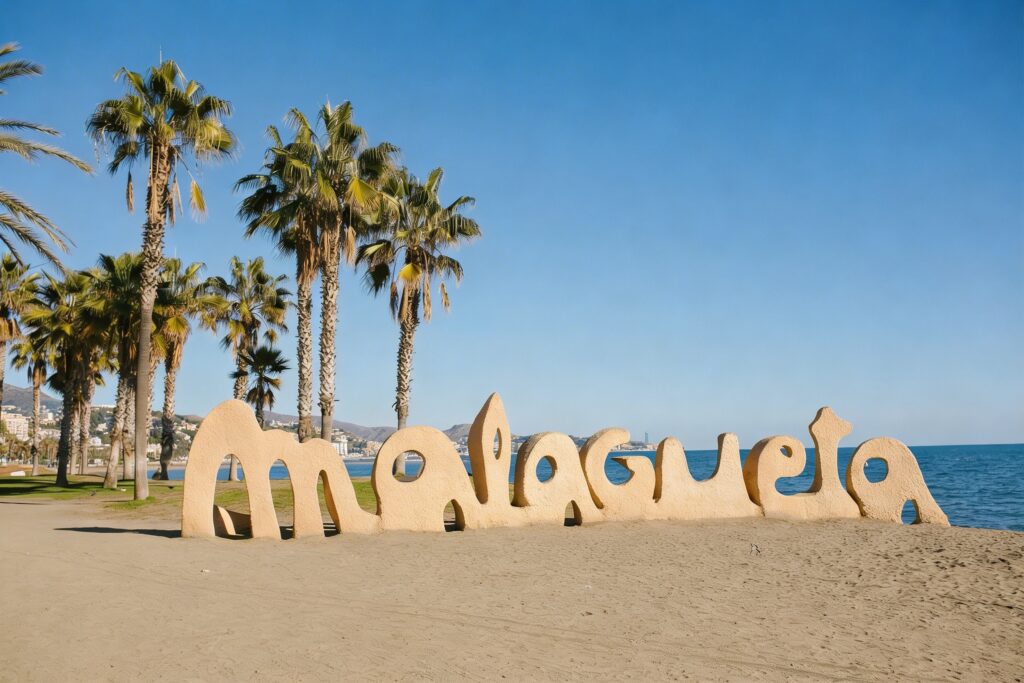
La Malagueta: For Beach Lovers Who Want City Access
Best for: Beach lovers, longer stays, relaxed travelers
Vibe: Coastal, airy, residential
Just a ten-minute walk from the historic center lies La Malagueta, Malaga’s main urban beach When friends ask me where to stay in Malaga for a mix of culture and coastline, I often point them here. It’s the best of both worlds. La Malagueta offers something special: the ability to swim in the sea in the morning and walk into the historic centre in the evening.
The neighborhood itself is residential and relaxed. Wide avenues lead down to the promenade, where locals jog at sunrise and families gather for long, lazy afternoons on the sand. The beach here is urban, yes, but there’s something deeply soothing about being able to walk from your apartment straight into the Mediterranean.
What I appreciate most is the pace. La Malagueta feels like a quiet exhale after the energy of the center. You’ll find classic chiringuitos (beach bars) serving fried fish and cold beer, and if you’re lucky, your accommodation might have a view of the bullring.
Stay here if: You want to spend your days by the water but still be within a pleasant stroll of all the main sights.
Why stay here
- Beachfront apartments
- Spacious and light-filled
- Still walkable to the centre
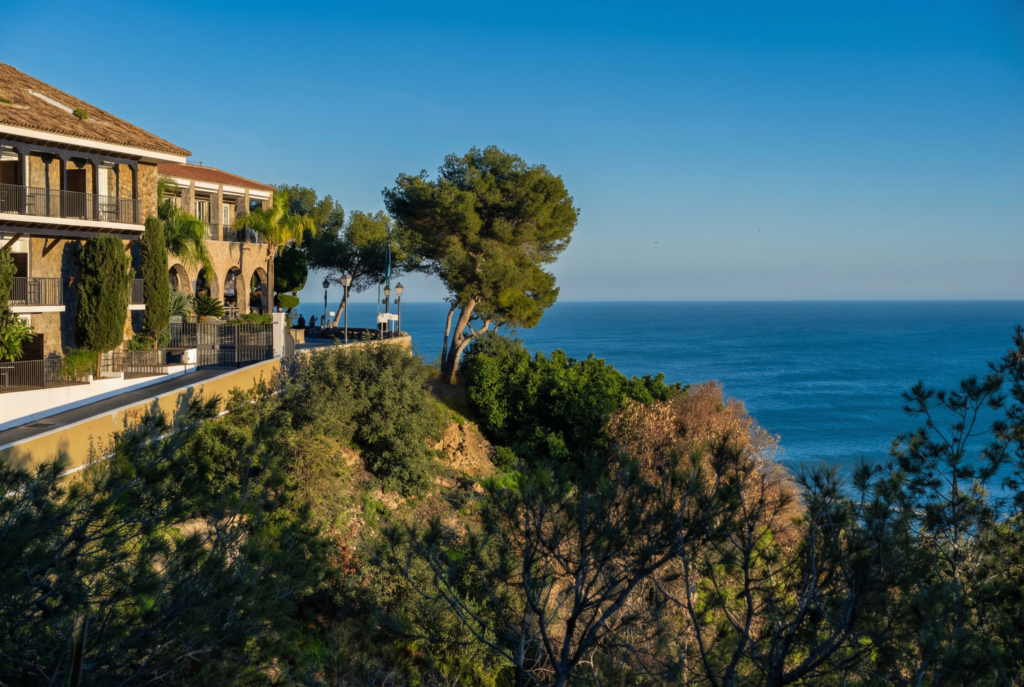
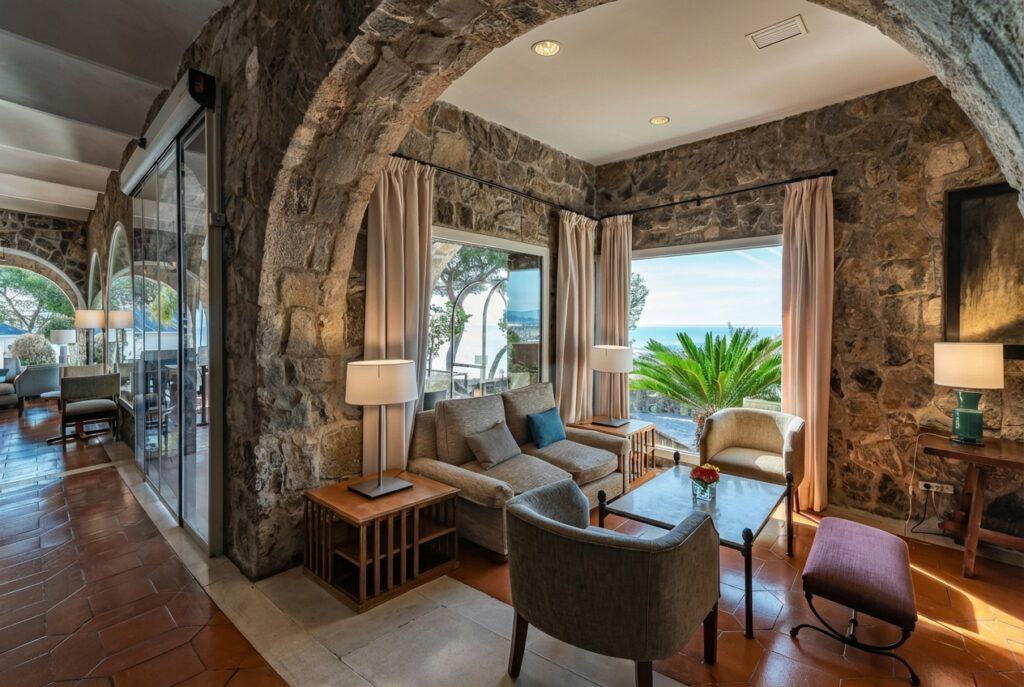
Recommended stays
- Parador de Málaga Gibralfaro — Technically above this neighbourhood, nestled into the Gibralfaro hill with extraordinary views over the city and sea. A splurge, but the experience of having the city laid out below you is unlike anything else.
- The Gran Hotel Miramar, a historic gem, provides luxury with ocean-facing rooms and spa treatments using local ingredients.
- For mid-range: AC Hotel Málaga Palacio — Positioned at the edge of the historic centre with views looking toward the sea. A strong, reliable option.
- For budget-friendly beach access, there are several small apartment complexes along the Paseo de la Farola and Paseo Marítimo that offer simple, comfortable stays with direct beach proximity.
Things to consider
- Fewer boutique hotels
- Some buildings are older
El Palo & Pedregalejo: For the Authentic, Off-the-Beaten-Path Experience
Who It’s For: Families, longer-stay travelers, remote workers, and anyone who finds resort areas too sterile and city centres too hectic.
These two neighborhoods, east of La Malagueta along the coast, are where many of Malaga’s long-term expats and local families actually live. There are no grand museums here. There are no tourist buses. What there is: a long, gentle beach, a string of excellent seafood restaurants (some of the best in the entire city), a weekly market, and a pace of life that feels genuinely Andalusian.
I take visitors here whenever they tell me they’ve been to Malaga before and want to see something different. It never fails to surprise them. If you’re willing to venture a little further east, El Palo is where Malaga feels most like itself. This former fishing village, now absorbed by the city, has held onto its identity with quiet pride. The main drag runs parallel to the beach, lined with chiringuitos that specialize in espetos—sardines skewered and grilled over open fires on the sand.
These areas are about long walks on the less-crowded beach, ice-cold beer, and the smell of charcoal and sea salt. The pace is slower, the air is fresher, and the connection to the sea is palpable.
The neighborhood is connected to the city centre by bus (Line 11) and is perfectly walkable along the beach promenade if you have the time. It rewards you with a glimpse of everyday Malaga that most visitors miss. You’ll be staying among fishermen, young families, and old-timers who have watched the sun rise over the water for their entire lives.
Why stay here
- Authentic local atmosphere
- Excellent seafood
- Peaceful evenings
Recommended stays
Large hotels are rare here, which is part of the appeal. Most accommodation is in the form of apartment rentals — and this is one of the few areas of the city where I would actively recommend this option. Look for apartments with a small terrace or balcony if you can; having a coffee outside in the morning with a sea breeze is one of those simple pleasures that makes a trip.
Hotel Pedregalejo is a small, family-run option that offers reliable comfort and a genuinely local atmosphere.
Things to consider
- Further from main attractions
- Best if you’re staying 5+ nights
Limonar: Quiet Elegance on the Eastern Edge
Who It’s For
Best for: Travelers who prefer a residential, upscale feel. It has quiet streets, green parks, and a slower pace within easy reach of the city.
What It’s Like
Limonar is one of Malaga’s most beautiful residential areas — wide, tree-lined streets, early 20th-century architecture, and a calm that’s a world away from the tourist centre while still being just fifteen minutes on foot from the Alcazaba. It borders La Malagueta and the Paseo del Parque, which gives you easy beach and park access.
There are few hotels here — this neighborhood is better suited to apartment or villa-style stays. But if you find something here, you’ll experience a version of Malaga that most visitors never see.
Local and Budget Options
If you’ve been to Malaga before, or prefer some more local and budget options for longer stays, these areas offer some great options:
El Perchel & Guadalmedina
Best for: Budget travelers, slow travelers, those who want to understand Malaga beyond its postcard version.
What It’s Like
These neighborhoods west of the historic centre and along the Guadalmedina river are among the least touristic in central Malaga. They have a working-class, lived-in quality that some travelers find a little rough around the edges — and honestly, parts of it are still in transition. But if you’re a thoughtful traveler who values authenticity over polish, there’s something very real here.
The indoor Mercado de Huelin is nearby, there are several excellent neighbourhood bares de tapas, and you’re a ten-to-fifteen minute walk from the cathedral. Accommodation is noticeably more affordable than in the centro.
I’d recommend this area specifically for travelers who have been to Malaga before, or those who are staying for more than a week and want to feel genuinely embedded in everyday city life.
Teatinos: For a Taste of Modern Malaga Life
Best for: Budget travelers, digital nomads, longer stays
Vibe: Modern, practical, student-friendly
Teatinos is Malaga’s university district. About 15 minutes out of the city ( 30mins by bus), it is a sprawling, modern barrio that feels light-years away from the cobblestone romance of the center. The neighborhood itself is defined by wide, tree-lined boulevards and modern architecture. It’s a place of university campuses, contemporary parks, and a food culture that has exploded in recent years.
The main streets like Avenida de Andalucía and Calle Louis Pasteur lined with an astonishing concentration of bars and restaurants, many of which have become destinations in their own right for locals from all over the city.
What stays with me about Teatinos is its energy. On a Thursday night, the terraces are packed with students, professors, and young families, all sharing plates of creative tapas and bottles of wine that cost a fraction of what you’d pay in the center. The atmosphere is relaxed, unpretentious, and deeply social. People come here to eat well, to linger, and to catch up with friends—often for hours.
Why stay here
- Affordable accommodation
- Modern apartments
- Good public transport
Things to consider
- Less charm
- No historic atmosphere
Practical Tips for Staying in Malaga
- Book early, especially in spring or fall for milder weather and fewer crowds, ideal for slow exploration.
- Budgets vary: Expect €100-200 per night in central areas, less in outskirts.
- Use the efficient bus system or rent bikes to navigate sustainably.
- For foodies, prioritize stays near markets like Atarazanas for fresh ingredients.
- If traveling solo, opt for sociable neighborhoods like Soho.
Remember, Malaga’s charm lies in the unexpected, allow yourself amble time to wander.
Making Your Choice
The beauty of Malaga is how compact and walkable it feels, yet each neighborhood offers its own personality. Ultimately, deciding where to stay in Malaga is about matching your travel style to the city’s diverse personality. Want culture at your doorstep? Choose the Centro. Craving sand and sea? Head to La Malagueta or El Palo. Looking for creative energy? Soho is calling.
If you’ve been before, or if you value calm over convenience, Soho or Pedregalejo will show you a different, quieter Malaga that I think you’ll love even more.
And if what you really want is to wake up to the sound of the sea and have nowhere urgent to be? Pedregalejo in the morning is one of the most peaceful experiences this city has to offer.
Wherever you end up staying, I hope Malaga surprises you. Take your time. Get lost in a side street. Sit on a bench and watch the light change. That’s the real magic here—and it’s available in every single neighborhood.
You May Also Be Interested In:
- Ultimate Guide to Malaga: What to Do and Eat
- Best Day Trips from Málaga: A Local Guide to Easy Escapes Beyond the City
- The Perfect 3 Days in Malaga Itinerary
- Hidden Gems in Malaga: Local Secrets & Off-the-Beaten-Path Tips
- Best Places to Eat in Malaga: An Insider’s Guide to Best Restaurants
- The Complete Guide to Nerja: Stunning Beaches, Cave, and Slow Travel