

If you’re looking for a coastal town in southern Spain that still feels relaxed, walkable, and genuinely local, Nerja is a jewel that is definitely worth a visit !
Just under an hour east of Málaga, Nerja feels very different from the larger resort towns of the Costa del Sol. There are no high-rise hotel walls blocking the sea, no massive party districts, and no endless rows of package-holiday resorts.
Instead, you find quaint whitewashed streets filled with bougainvillea, small tapas bars that open slowly in the evening, and incredibly stunning viewpoints to loiter and watch the sunsets.
What stayed with me the first time I visited was how balanced the town feels. You have beautiful beaches, but also mountains just behind the coast. A lively old town, but still quiet mornings. It’s the kind of place that rewards wandering slowly.
This guide will walk you through everything you need to know about Nerja from the best beaches and viewpoints to where to eat, when to visit, and how to experience the town at a slower pace.

Where Is Nerja?
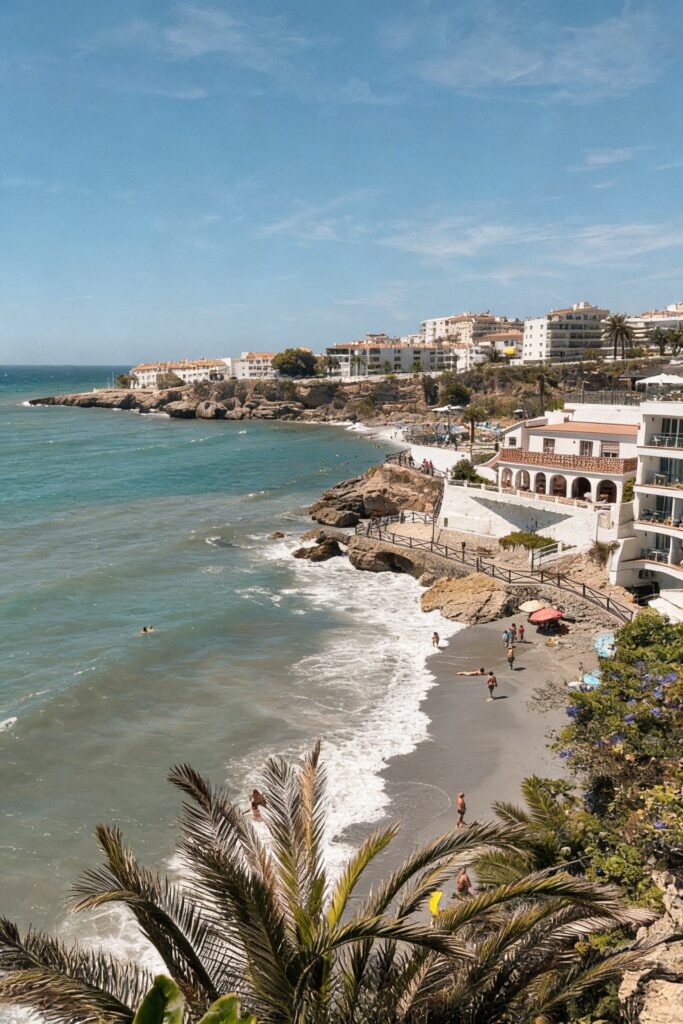
Nerja sits on the eastern edge of the Costa del Sol, about 50 km east of Málaga and just before the province transitions into Granada Province. What makes the landscape here especially beautiful is the contrast between sea and mountains. Behind the town rises the rugged Sierras of Tejeda, Almijara and Alhama Natural Park, which creates dramatic cliffs and hidden coves along the coast. Because there are no major rivers nearby, the water around Nerja tends to be particularly clear — one of the reasons snorkeling and swimming here are so enjoyable.
The nearest airport is Málaga-Costa del Sol (AGP), which is well connected to most European cities and increasingly served by transatlantic routes. From the airport, the drive east along the A-7 coast road takes around 45 minutes by car or taxi. There is also a regular bus service operated by ALSA that runs from Málaga bus station several times daily, with a journey time of roughly 1 hour 15 minutes. The bus can get quite busy even during shoulder season, so it is recommended to buy tickets online beforehand, although you can also buy it directly at the bus station.
Why Visit Nerja?
There are many towns along southern Spain’s coastline, but Nerja has a few qualities that make it special.
1. One of the Most Beautiful Viewpoints in Spain
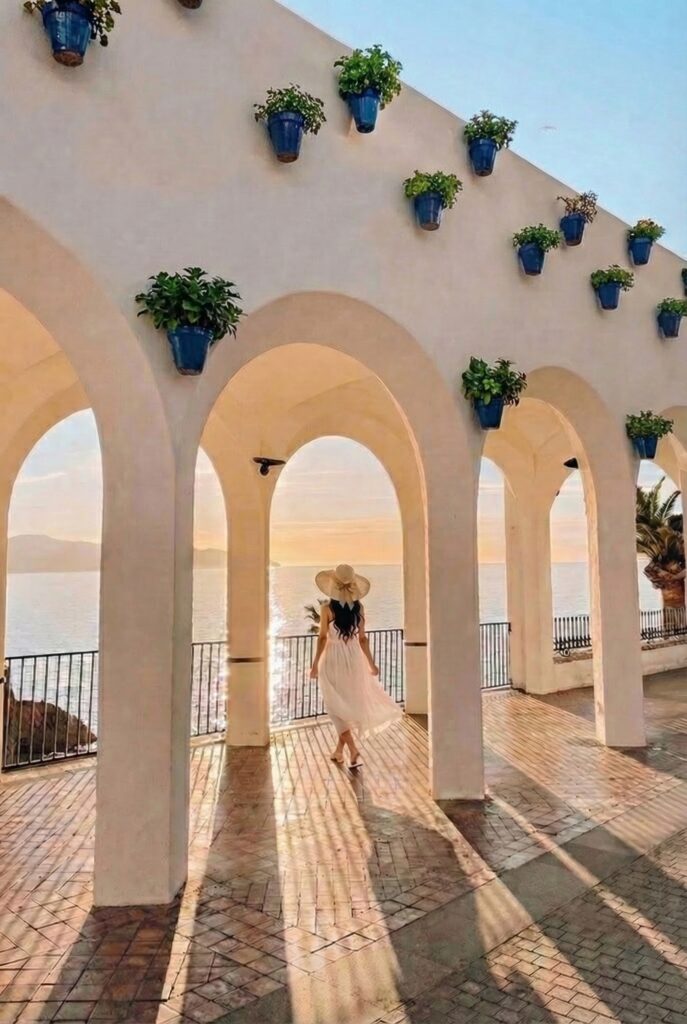
At the center of town sits the famous Balcón de Europa, a palm-lined promenade extending over the Mediterranean. It was once the site of a coastal fortress before being transformed into the scenic viewpoint visitors see today.
Standing here, you get sweeping views of cliffs, beaches, and the open sea stretching along the coastline.
2. Incredible Beaches and Hidden Coves
Unlike many Costa del Sol resorts, Nerja’s coastline is made up of small coves separated by cliffs, which creates a series of intimate beaches rather than one long stretch.
3. One of Spain’s Most Famous Cave Systems
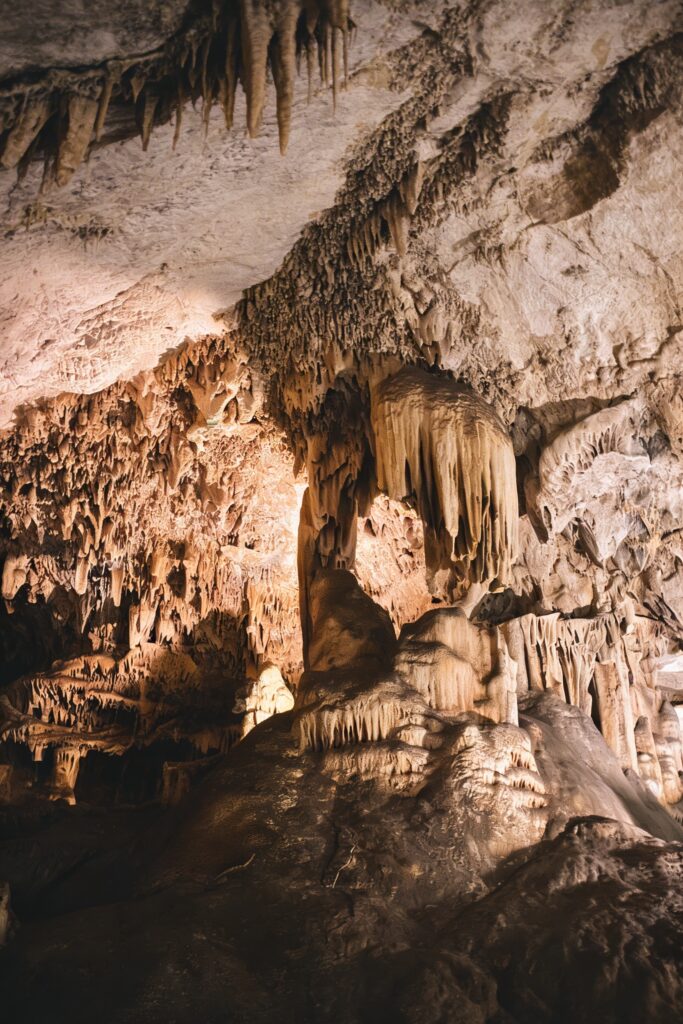
Just outside town is the remarkable Caves of Nerja, a vast underground network stretching almost 5 km with enormous stalactites and cathedral-like chambers.
The caves were rediscovered in 1959 by a group of local teenagers and quickly became one of the most visited attractions in Andalusia.
Best Things to Do in Nerja
1. Watch Sunset at the Balcón de Europa
If you do only one thing in Nerja, come here at sunset.
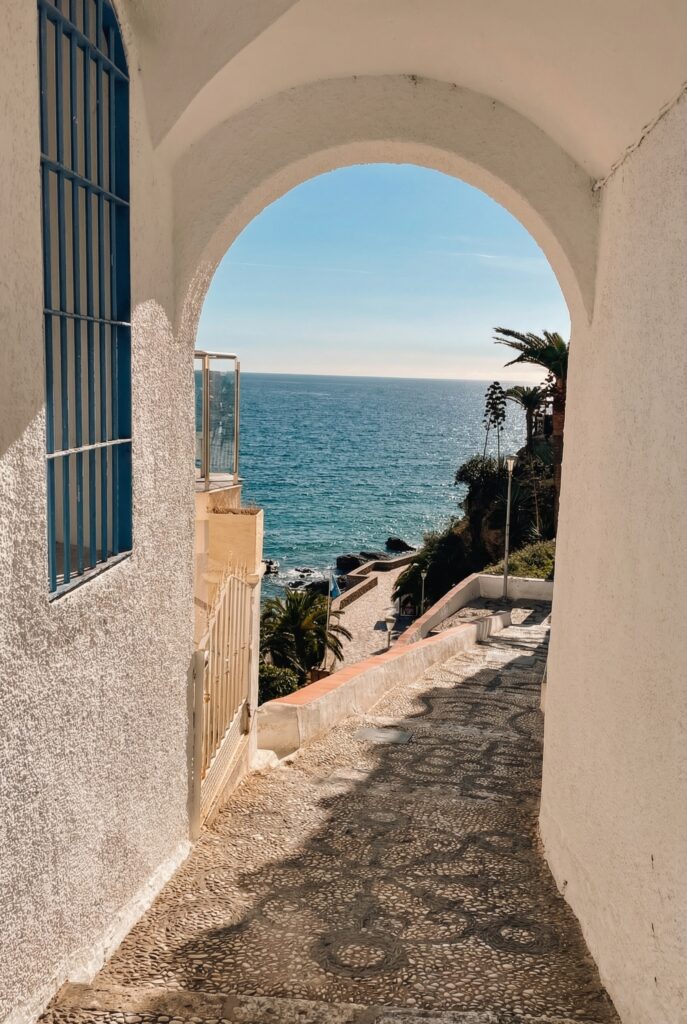
The Balcón de Europa sits on a rocky promontory between two beaches, offering panoramic views of the Mediterranean coastline. Legend has it that King Alfonso XII, after the devastating earthquake of 1884, stood here and declared it the “Balcony of Europe,” captivated by the panoramic views . Standing there, with the sea breeze on your face and the vast blue horizon stretching out before you, it’s easy to understand his awe.
During the evening you’ll often see musicians, street artists, and locals gathering along the promenade.
A gentle travel tip: come early morning as well. Before the crowds arrive, the atmosphere is calm and you can hear the waves below the cliffs.
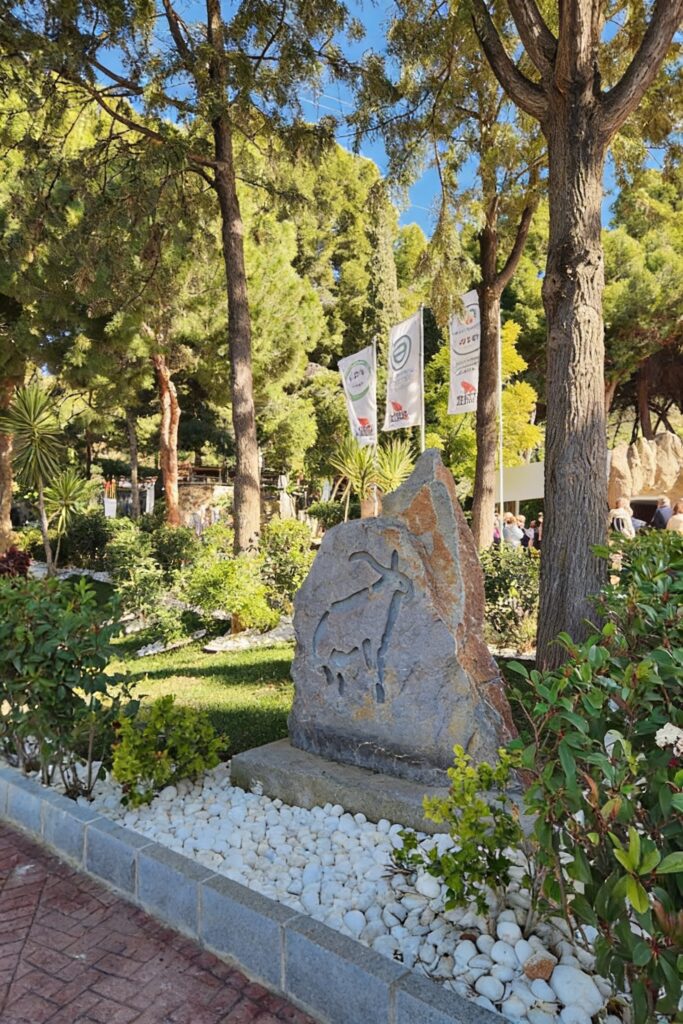
2. Visit the Caves of Nerja (Cueva de Nerja)
A few kilometers outside town lies one of Spain’s most impressive natural attractions: the Caves of Nerja. You can get there by taxi or a short bus ride out of the only bus station in Nerja. Discovered in 1959 by a group of local boys, the caves contain the world’s largest known stalactite column, as well as cave paintings dating back some 42,000 years — placing them among the oldest known examples of Palaeolithic art.
Inside, you’ll find vast chambers filled with stalactites, stalagmites, and enormous limestone columns formed over millions of years. The scale of the main hall — the Sala del Cataclismo — is so large that it is used as a concert venue each summer during the Cueva de Nerja Festival, which has hosted performances from international musicians and orchestras. Even if you have visited many cave systems before, this one warrants the visit.
Practical Tip : Buy your tickets online in advance. It saves you waiting in line and guarantees your entry time, especially during peak seasons . The temperature inside is a constant, cool 18°C (64°F), so even on a scorching summer day, you’ll want a light jacket. Plan to spend about an hour to an hour and a half exploring the lit pathway .
Wear comfortable shoes as some areas can be slippery and there are several stairs.
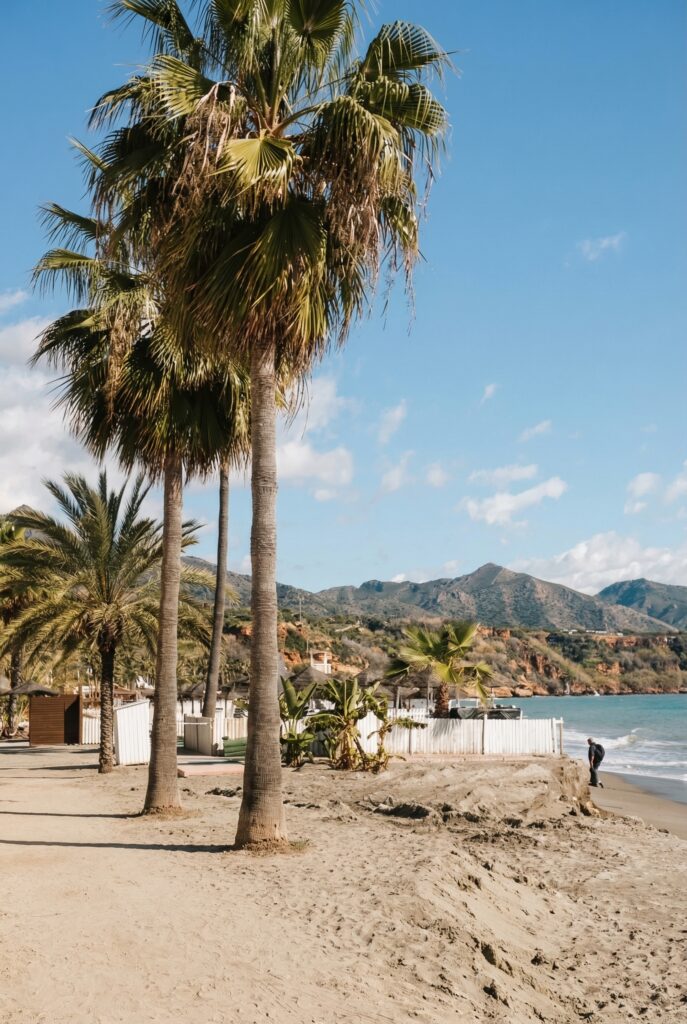
3. Swim at Playa Burriana
The most popular beach in town is Playa Burriana, located just east of the old town. This is Nerja’s main beach and the most popular for good reason. It is long, wide, reasonably well-serviced, and sits directly below the town cliffs with a backdrop that looks almost theatrical in the afternoon light. The sand is coarser than you might expect from photographs, and the beach fills quickly in summer arrive before 10am if you want space.
This beach is known for its wide shoreline, restaurants along the promenade, and calm water perfect for swimming. There are several chiringuitos (beach bars) along its length; El Ayo is the most well-known, famous for its paella cooked over an open flame in enormous pans. It is worth queuing for.
You can rent kayaks here, try paddleboarding, or simply enjoy a long seaside lunch.
4. Discover Hidden Beaches
While the larger Burriana Beach is fantastic for a long swim, I suggest seeking out the smaller coves around town. Tucked away under the cliffs and accessible via winding footpaths, they feel secluded and intimate. They are perfect places to lay out a towel, read, or practice a gentle yoga flow right by the water’s edge.
Some of the most beautiful include:
- Playa de Maro – a protected natural cove often ranked among Andalusia’s most beautiful beaches.
- Playa Torrecilla – a relaxed beach west of town with a long promenade.
- Playa del Salón – a small sandy beach tucked beneath the Balcón de Europa.
Each beach has a slightly different atmosphere, which makes exploring them part of the fun.
A great way to experience this rugged coastline is from the water. Kayak tours departing from Burriana or Maro are one of the most popular things to do in Nerja. Paddling through the crystal-clear water, you can explore sea caves, spot marine life in the protected snorkeling areas, and feel the spray of the waterfall up close. It feels genuinely adventurous, yet it’s accessible to almost everyone
5. Walk the Old Town Streets
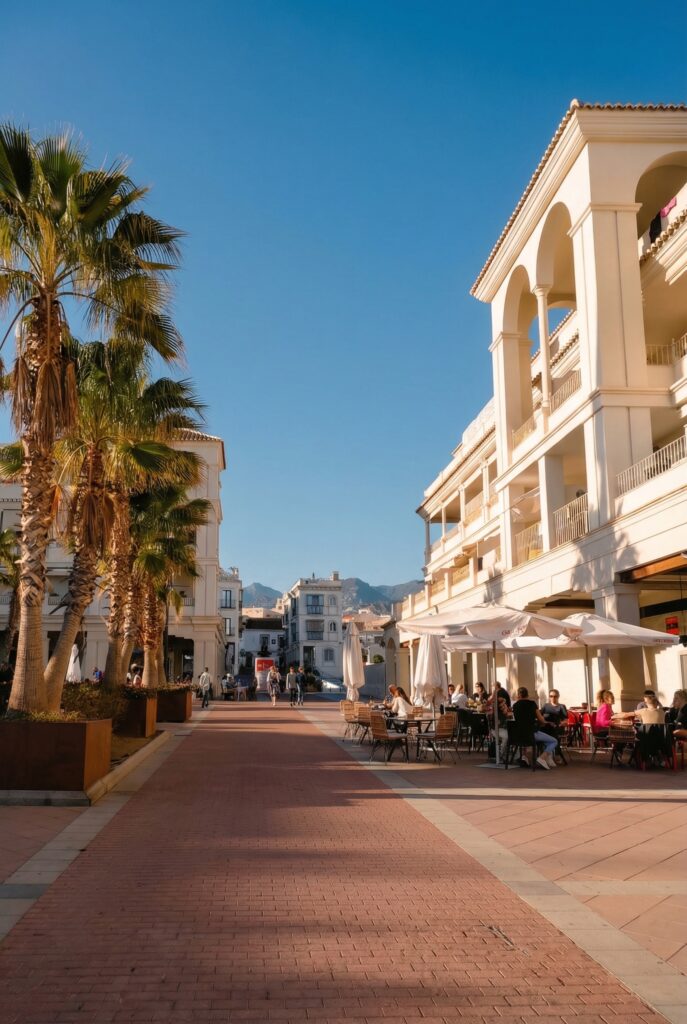
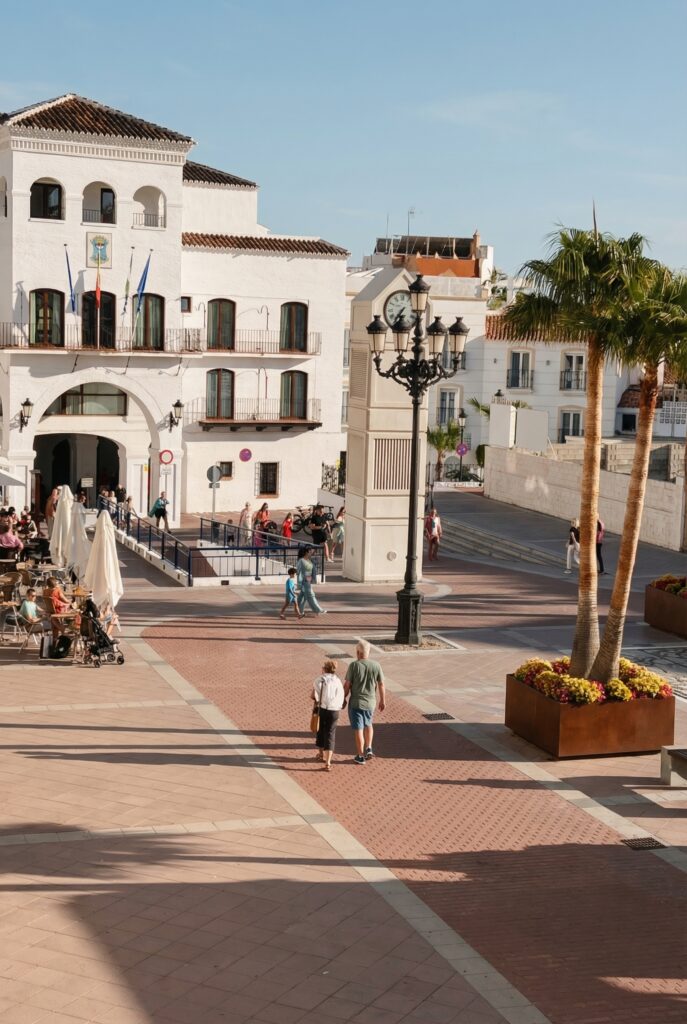
Nerja has a lovely historic center is small enough to explore on foot. Here you can find whitewashed houses with flower-filled balconies, small plazas with cafes, and plenty of local bakeries and tapas bars between other modern shop. You’ll eventually find yourself back near the Balcón de Europa, which naturally acts as the town’s gathering point.
A lot of these shops and restaurants open till late, which makes it a pleasure to wonder around town after dark. Being a solo female traveler, it is one of the safest places I’ve ever felt in Spain and Europe.
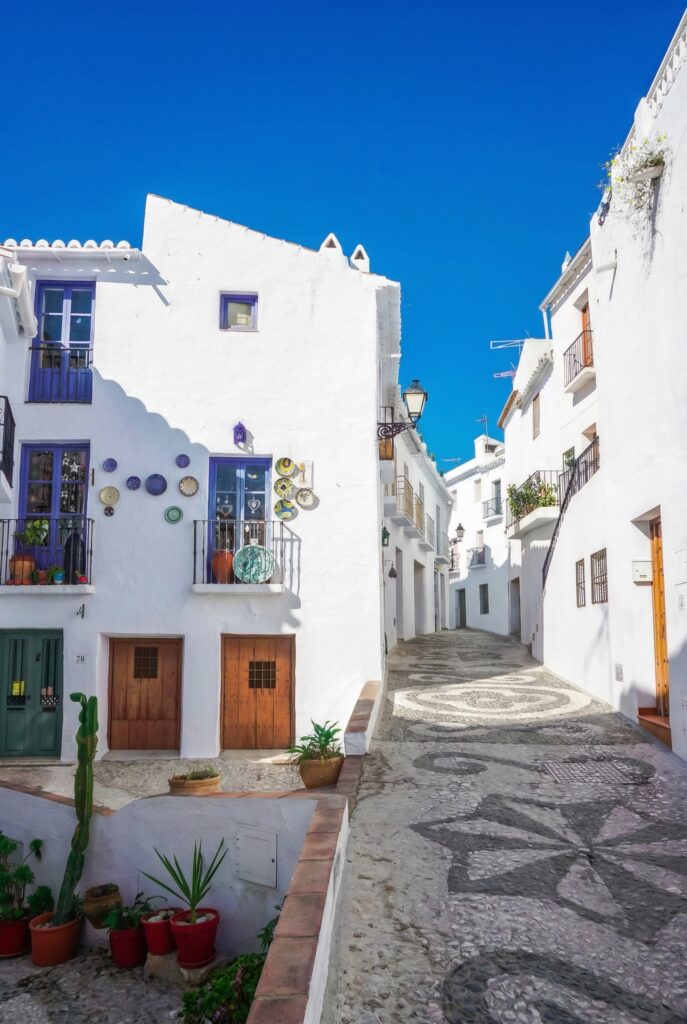

6. Take a day trip to Frigiliana
No visit to Nerja is truly complete without spending at least half a day in its famous neighbor, Frigiliana. Perched in the hills just a 15-minute drive away, it’s consistently named one of the most beautiful villages in Spain. Its whitewashed houses, narrow cobbled streets, and doorways overflowing with bright flowers are a photographer’s dream . The Moorish influence is strong here, and you can still see the old quarter’s original layout. Take your time getting a little lost, browsing the local craft shops, and soaking in the tranquility . Buses run regularly from Nerja, making it an easy and essential day trip.
7. Visit the Nerja Museum
Small but well-curated, the local museum (Museo de Historia de Nerja) tells the story of the town from its pre-Roman origins through the Moorish period, the Reconquista, and into the 19th and 20th centuries. The building itself is beautiful, a traditional Andalusian house with a central courtyard and the collection includes artefacts from the Cueva de Nerja alongside documentation of the town’s history as a fishing and sugar-cane production ommunity. It takes about 45 minutes to move through properly, and it gives context to everything else you see in Nerja.
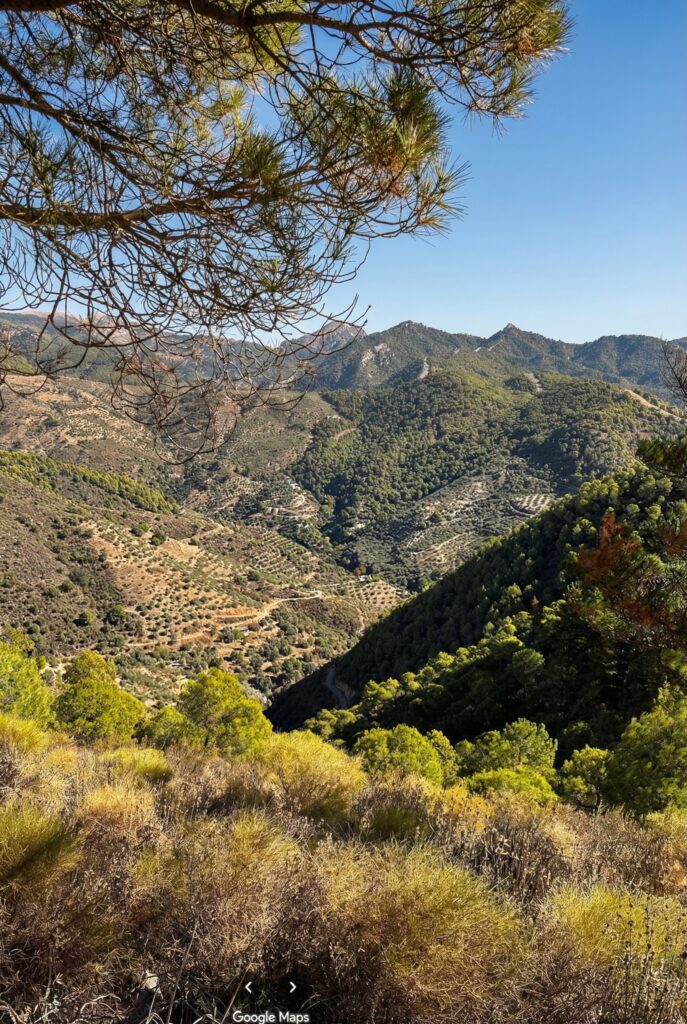
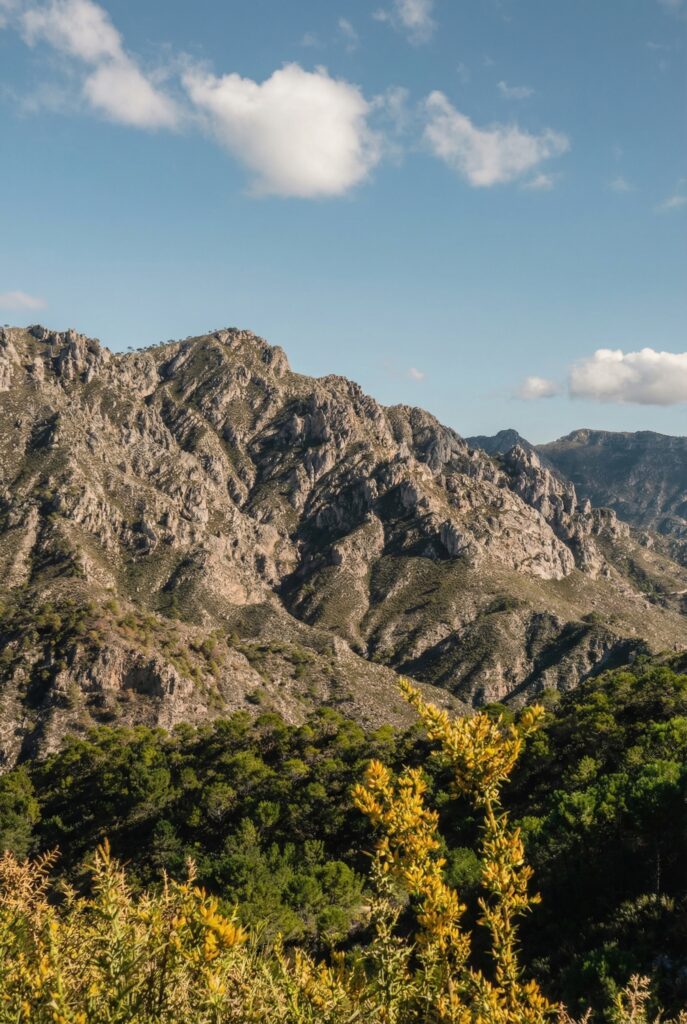
8. Hike in the Sierras de Tejeda, Almijara y Alhama
The natural park that backs Nerja offers some of the finest hiking on the Costa del Sol. The terrain here is dramatic, with limestone karst, deep gorges, pine and oak forest and the trails range from accessible coastal walks to more demanding mountain routes.
The walk from Nerja to Maro along the clifftop is about 4 kilometres one way and manageable for most fitness levels. It passes through citrus groves, offers constant sea views, and ends at the Maro headland with its views down to the beach.
Another More ambitious is the ascent towards El Fuerte or the routes into the Río Chillar gorge, a remarkable walk along the actual riverbed that requires you to wade through water in places. The Chillar gorge walk is seasonal (best avoided after heavy rain and inadvisable in midsummer heat) and is deservedly popular; starting early avoids both the heat and the crowds.
Pro-tip: Good walking shoes are essential. The terrain is rocky and the paths are not always clearly marked beyond the main routes.
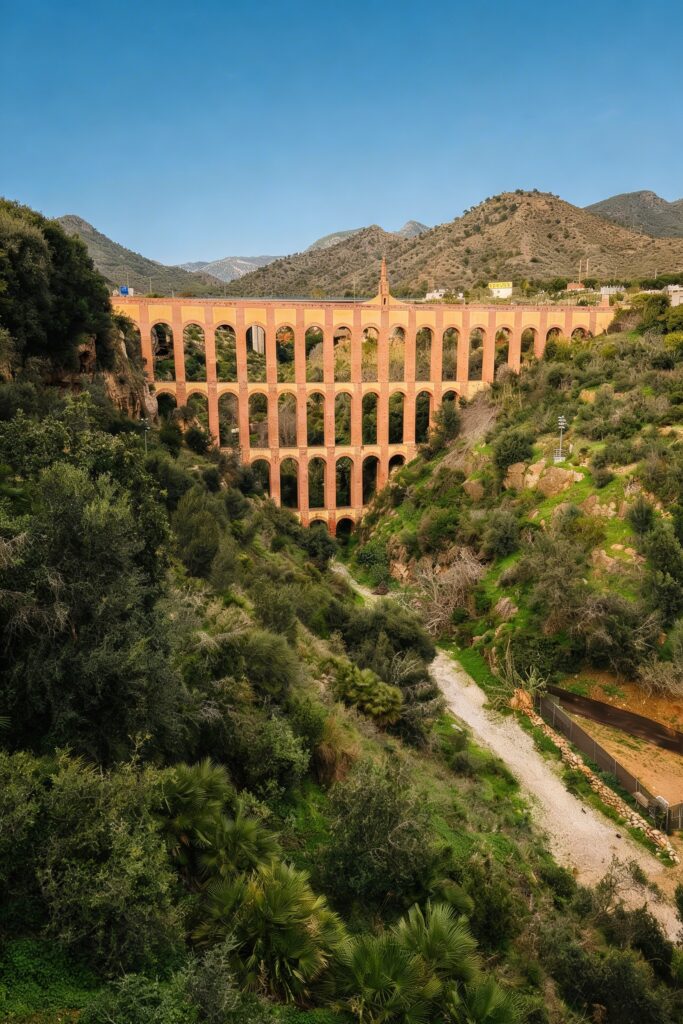
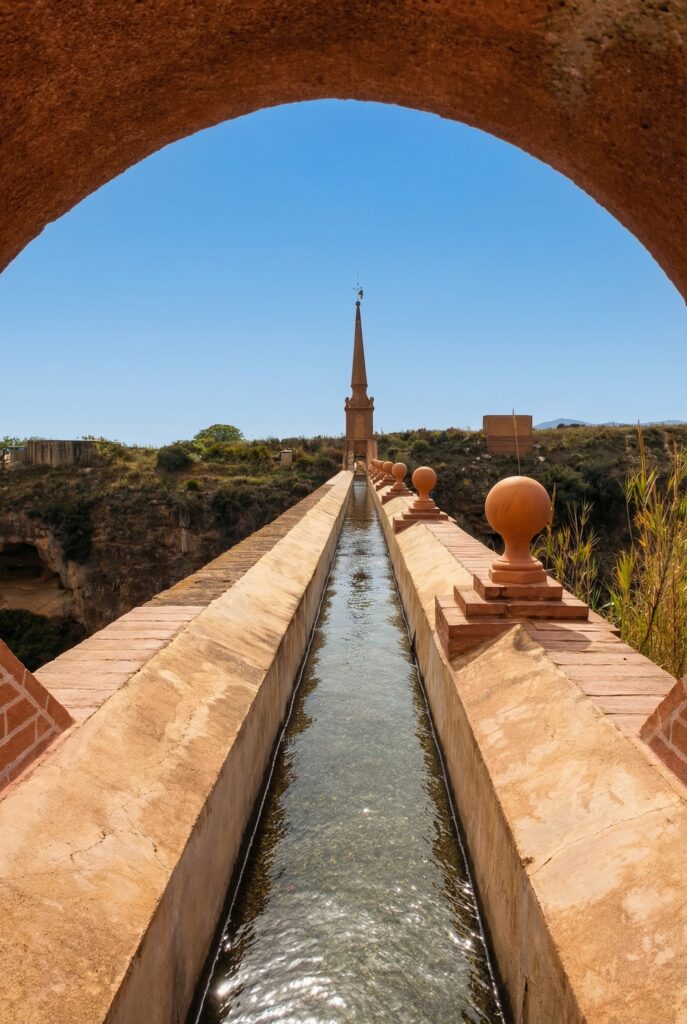
9. See the Eagle Aqueduct
Just outside Nerja stands the striking Eagle Aqueduct (Aqueduct of El Águila).
Built in the 19th century to supply water to a nearby sugar factory, the aqueduct’s four tiers of arches create a dramatic sight against the surrounding mountains.
It’s worth stopping there for a few photos on your way to or back from the caves.
Where to Eat in Nerja: A Local’s Honest List
Tetería Zaidín is one of most beautiful cafe in nerja, and certainly one of my favorites ! It is an oasis of calm in their gorgeous, homely garden, with happy plants, birds and a little water feature – as well as several cozy indoor spaces. Lovely service every visit, fresh and homemade food/drinks, and just a wonderful atmosphere overall.
Balcon de Pico serves a delightful breakfast with a phenomenal ocean view overlooking the balcon. The restaurant is perched on a cliff and you go through a small entrance way and suddenly the Seaview is in front of you. It has a menu del dia ( fixed day menu) that cost around 15 euro and is a good way to sample their wonderful offerings.
Taberna de Pepe is a wonderfully traditional Spanish Taberna. The food is excellent and the portions impressive. Try the Langostin Pil Pil which was one of the best I’ve had. Its worth booking though as it does get full quickly. If you can, get a seat inside and have a look at the unique wall decorations.
Tapas bars
The evening tapas tradition is alive and well in Nerja. The streets around Calle Pintada and Plaza Cantarero are where to begin. Bar Redondo is a local institution, small, always slightly crowded, serving generous rounds of free tapas with every drink ordered. This is how tapas culture works in this part of Andalusia: you order a drink, and a small plate arrives. You order another, and another plate comes. It is informal, convivial, and deeply pleasant.
Restaurante Tapas la Rienda has excellent food with friendly, fast and attentive service. The mixed fried seafood plate is a specialty that tastes so good, and one of the the best pil pil shrimp we had in the city.
El Pulguilla nearby is similarly beloved. Its specialty is fried fish, with particularly good gambas al pil-pil (prawns in garlic oil) and the kind of relaxed, genuinely warm atmosphere that is difficult to manufacture.
For Fresh Fish
The pescadería (fish market) opens in the mornings, it is worth visiting at least once even just to see what has come off the boats. The fish sold here — dorada (sea bream), lubina (sea bass), pez espada (swordfish), mejillones (mussels) — is very fresh and very good value.
If you are eating out for fresh fish, Restaurante Ayo at Burriana beach remains a reliable choice for its whole grilled fish alongside the regional seafood paella & baked fideuà noodles. To avoid the crowd, arrive at lunchtime and not dinner.
Where to Stay in Nerja
Nerja’s accommodation spans everything from basic hostel dormitories to boutique hotels and private villas with private pools. The sweet spot for most travellers lies in the middle: small hotels or guesthouses in or near the old town, or well-located holiday apartments for those who prefer self-catering.
Boutique Hotels and Guesthouses
Hotel Carabeo on Calle Hernando de Carabeo is one of the town’s most consistently recommended small hotels. It has a cliff-edge position, a small pool, a garden terrace with sea views, and genuinely thoughtful service. The rooms are comfortable without being showy. It books out far in advance for summer — plan accordingly.
Hostal Don Peque near the Balcón is a more affordable option that punches above its price point for cleanliness, location, and the warmth of its management. It lacks the pool and the terrace of more expensive properties but makes up for it with character and central positioning.
Holiday Apartments
For stays of four days or more, self-catering apartments offer significantly better value and the pleasure of buying breakfast from the morning market, keeping wine cool in your own fridge, and coming and going on your own schedule. The old town and El Playazo areas both have a good supply of well-maintained apartments; booking directly through local property management agencies rather than larger platforms sometimes yields better rates and more responsive service.
What to Avoid
Properties advertising “sea views” on the far western outskirts of town sometimes require a 20-minute walk (largely uphill on the return) to reach the centre. Read the maps carefully before booking. In July and August, air conditioning is a necessity rather than a luxury, read the reviews to verify that they are actually functional, not merely listed.
Getting Around Nerja
The town itself is best navigated on foot. Most of what you will want to reach including the beaches, the Balcón, the restaurants, the market, the museum is within a 15-minute walk from the old town centre.
A car is useful primarily for day trips and for accessing the more remote beaches. Parking in the town centre is limited and frustrating in high season; most hotels and larger apartment complexes have private parking, which is worth factoring into your accommodation choice.
Local buses connect Nerja with Maro, Frigiliana, and Málaga. For everything else, taxis and local ride-hail services are reliable and reasonably priced by western European standards.
Practical Tips for Visiting Nerja
Language. Nerja has enough tourist infrastructure that basic English is widely spoken in hotels, restaurants, and shops. That said, any effort to communicate in Spanish is warmly received. Simple phrases like por favor, gracias, la cuenta por favor (the bill, please), and una mesa para dos (a table for two) will take you far.
Cash. Most restaurants and shops accept card payment, but smaller bars and the market operate on cash. Keep some euros available.
Tap water. The tap water in Nerja is safe to drink, though many locals prefer bottled water for taste. At restaurants, you can ask for tap water (agua del grifo).
Tipping. Tipping is customary but not obligatory in Spain. In restaurants, rounding up the bill or leaving a few euros on the table is appreciated. In bars, leaving your small change is sufficient and normal.
Sun. Even in spring, the Andalusian sun is strong. Factor 30 or above sunscreen, a hat for beach days, and light long-sleeved layers for midday walks are all sensible investments. The sun reflecting off white walls and pale sand catches people off-guard earlier in the year than they expect.
The siesta. Many smaller shops still close between approximately 2pm and 5pm. Plan errands for the morning or late afternoon. This is an invitation to eat lunch slowly and rest.
Quick Reference: Nerja at a Glance
Best time to visit: April–June or September–October
Nearest airport: Málaga-Costa del Sol (AGP), ~50 km west
Getting there: Car (45 min), bus from Málaga (1h 15 min)
Currency: Euro (€)
Language: Spanish (Castilian); basic English widely spoken
Best beaches: Maro (wild), Burriana (lively), Carabeo (scenic)
Must-eat: Tostada con tomate, boquerones fritos, fresh grilled fish
Don’t miss: Cueva de Nerja, a morning in Frigiliana, a day in Granada
Minimum stay: 3 nights; 5–7 nights recommended
Nerja is one of my favorite towns in Spain and for good reasons. Tourism has always been part of the economy here, and the town is well-practised at welcoming visitors with warmth and without fuss. But Nerja has, so far, resisted the complete surrender of its identity to the tourist economy. The locals I’ve met here are some of the kindest, and greet you with a warm smile.
You May Also Be Interested In:
- Ultimate Guide to Malaga: What to Do and Eat
- Best Day Trips from Málaga: A Local Guide to Easy Escapes Beyond the City
- The Perfect 3 Days in Malaga Itinerary
- Hidden Gems in Malaga: Local Secrets & Off-the-Beaten-Path Tips
- Where to Stay in Malaga: A Local’s Neighborhood Guide
- Best Places to Eat in Malaga: An Insider’s Guide to Best Restaurants